


Most municipalities recover the cost of a mobile pressure washer within 6-12 months from labor savings alone. Here is how to calculate it for your operation.
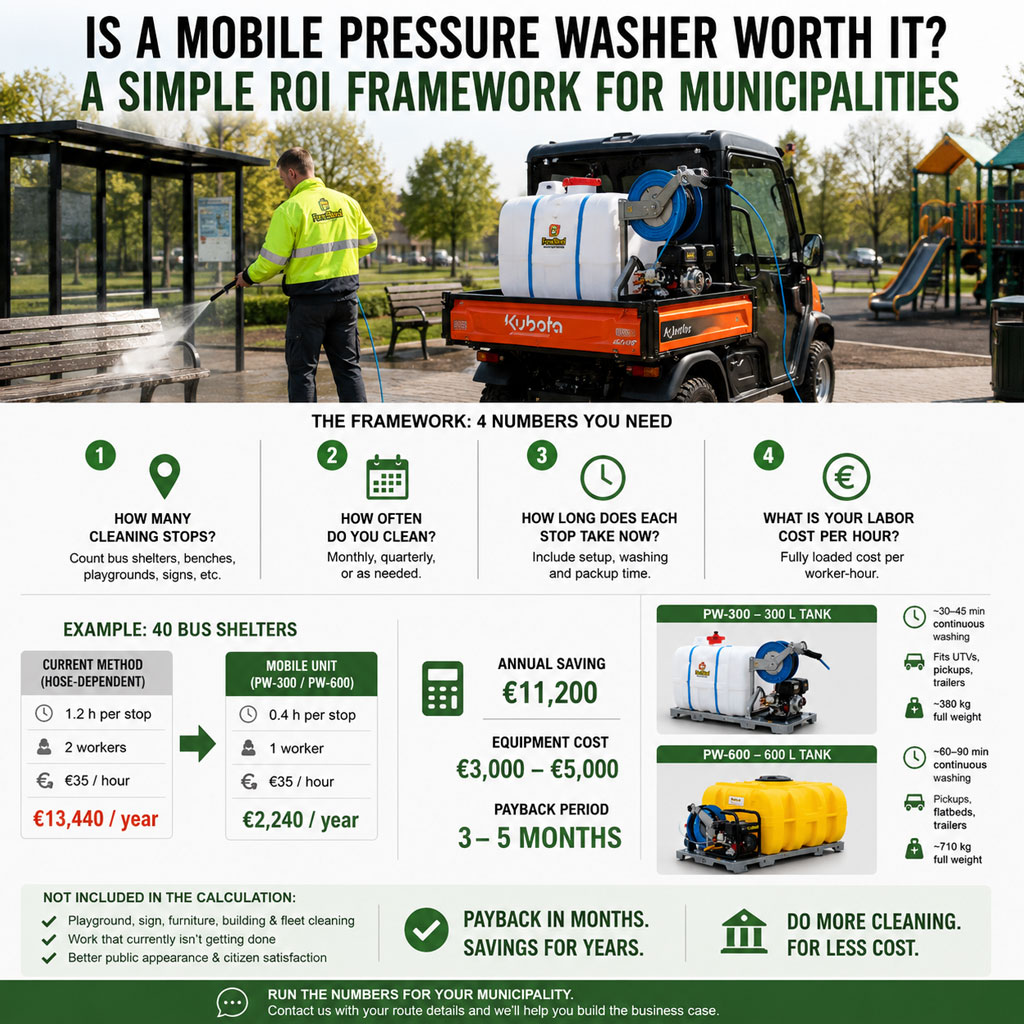

Most municipalities recover the cost of a mobile pressure washer within 6-12 months from labor savings alone. Here is how to calculate it for your operation.
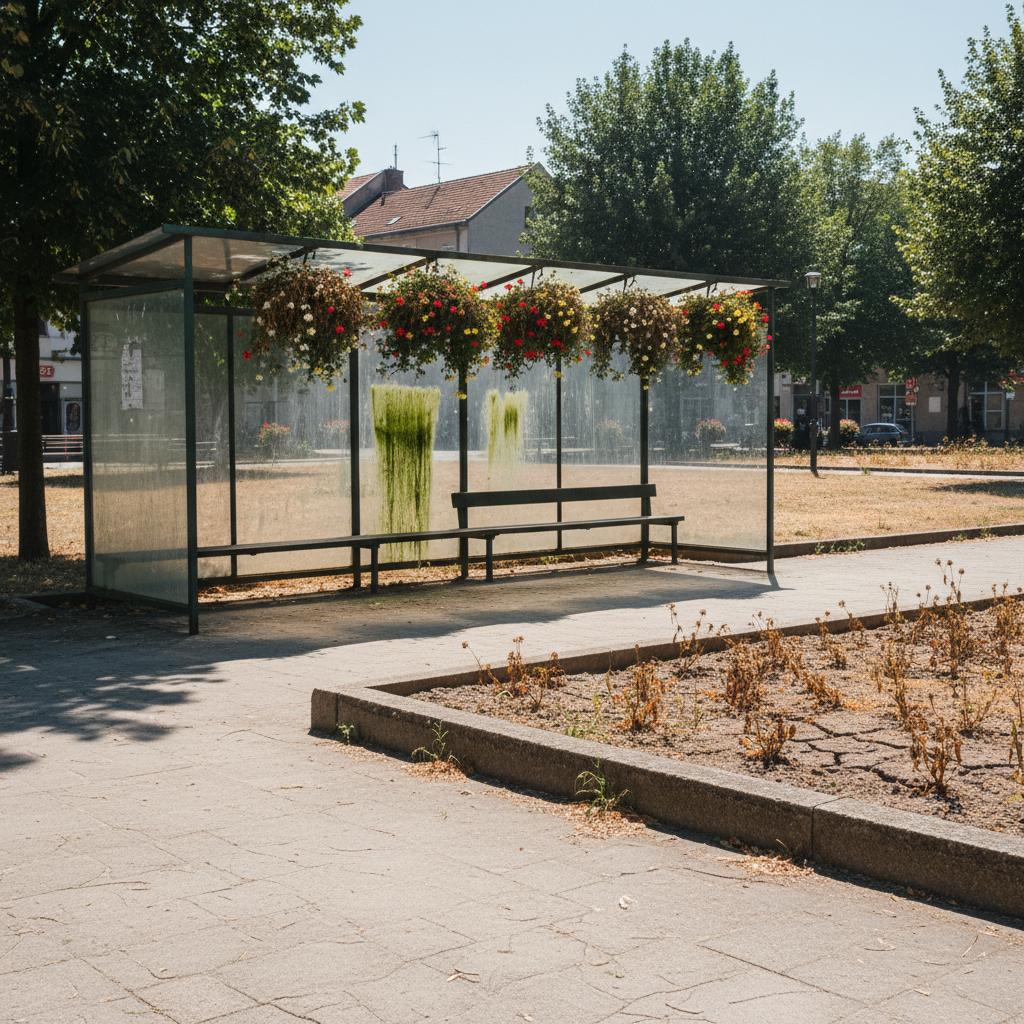
Summer is the high season for cleaning public infrastructure and maintaining green spaces. A practical weekly plan combining pressure washing routes and irrigation schedules keeps everything on track.
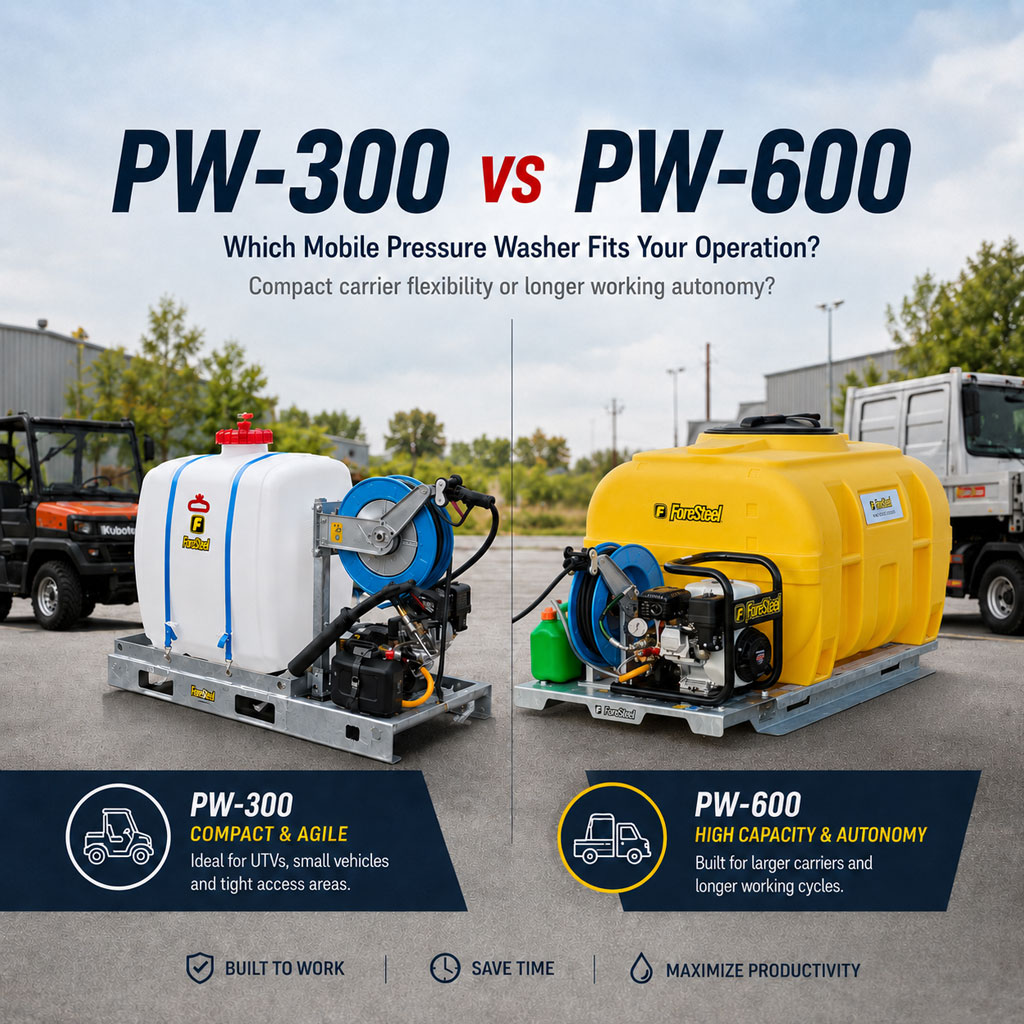
Both the PW-300 and PW-600 are self-contained mobile pressure washers. The right choice depends on your route length, vehicle size, and how many stops you make between refills.
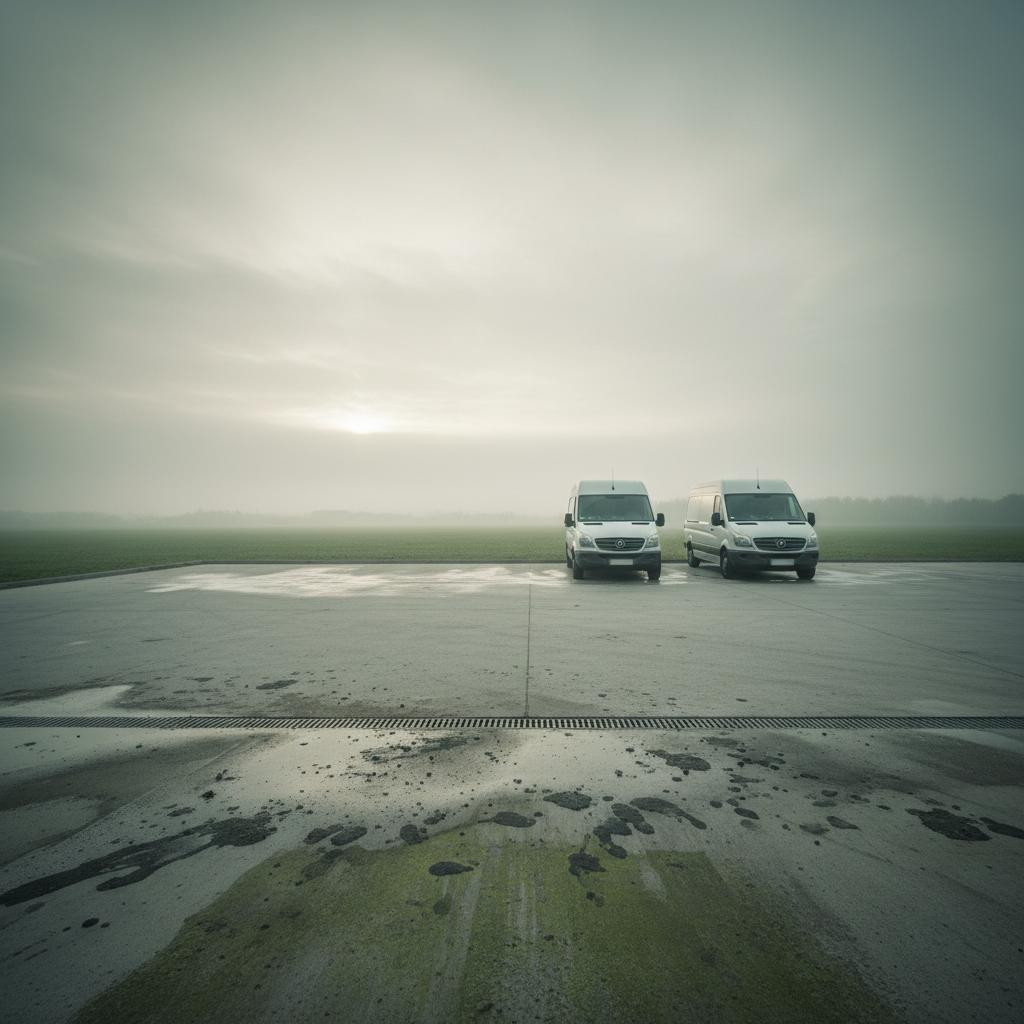
Fixed wash bays are expensive to build and only work if every vehicle can come to the bay. A mobile pressure washer goes to the vehicles instead — wherever they are.
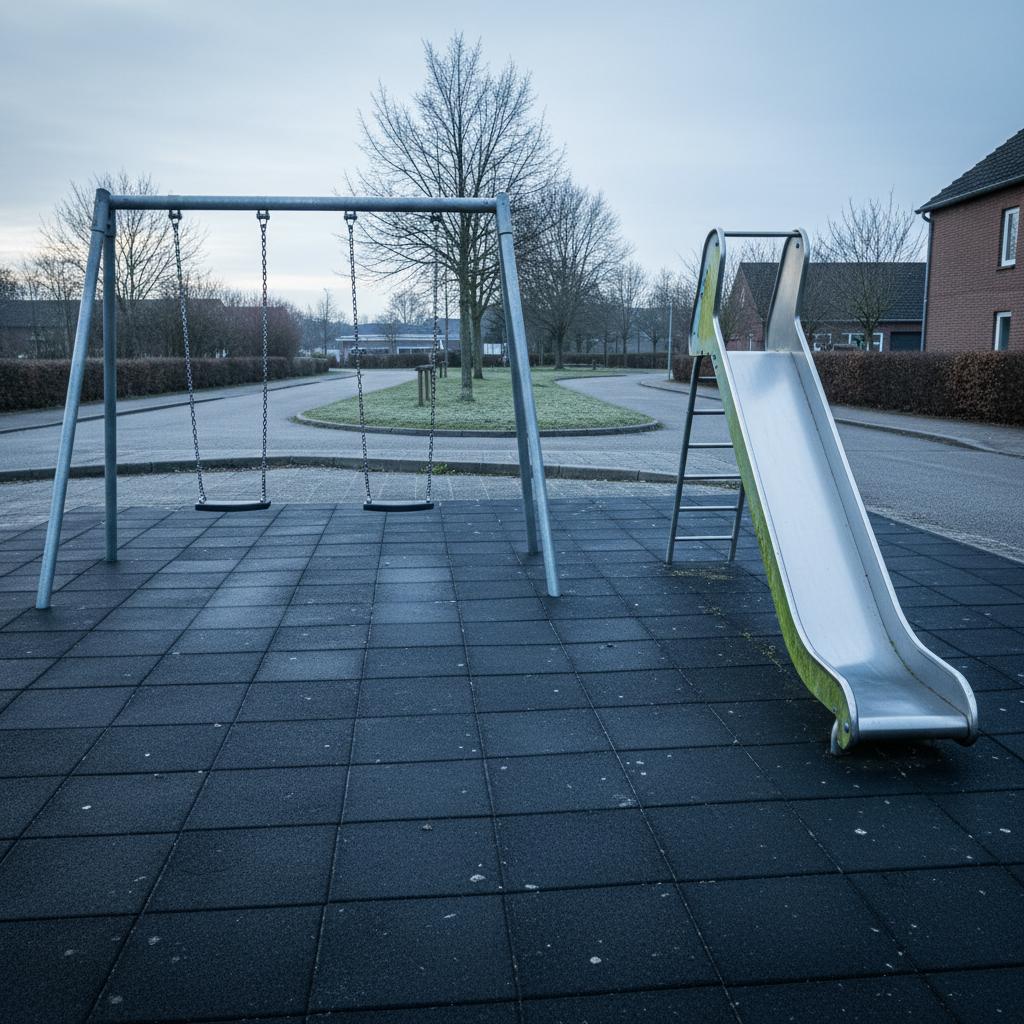
Playground equipment accumulates bird droppings, algae, mould, and general grime that creates both hygiene and safety risks. Regular pressure washing keeps playgrounds safe and presentable.
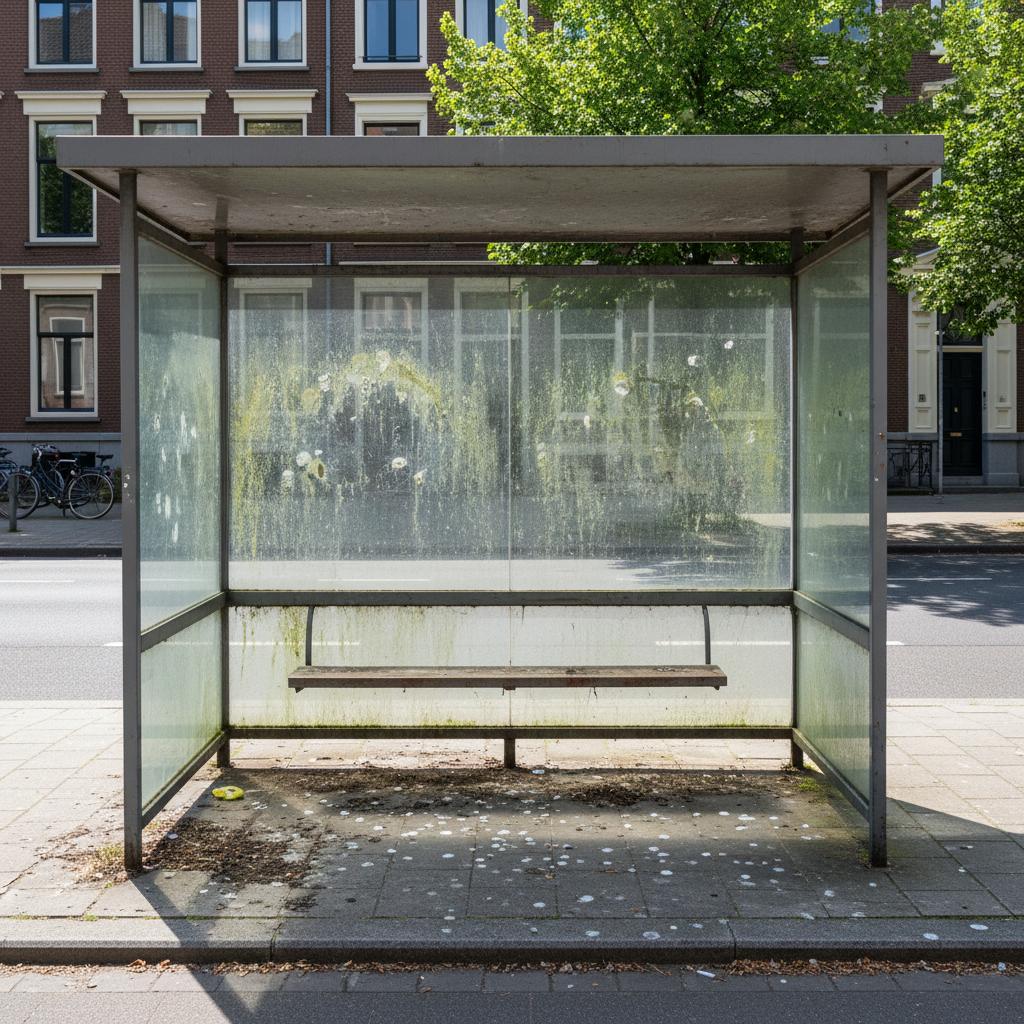
Bus shelter cleaning is one of the most repetitive municipal maintenance tasks. The biggest time cost is not the cleaning itself — it is getting water and equipment to each location.
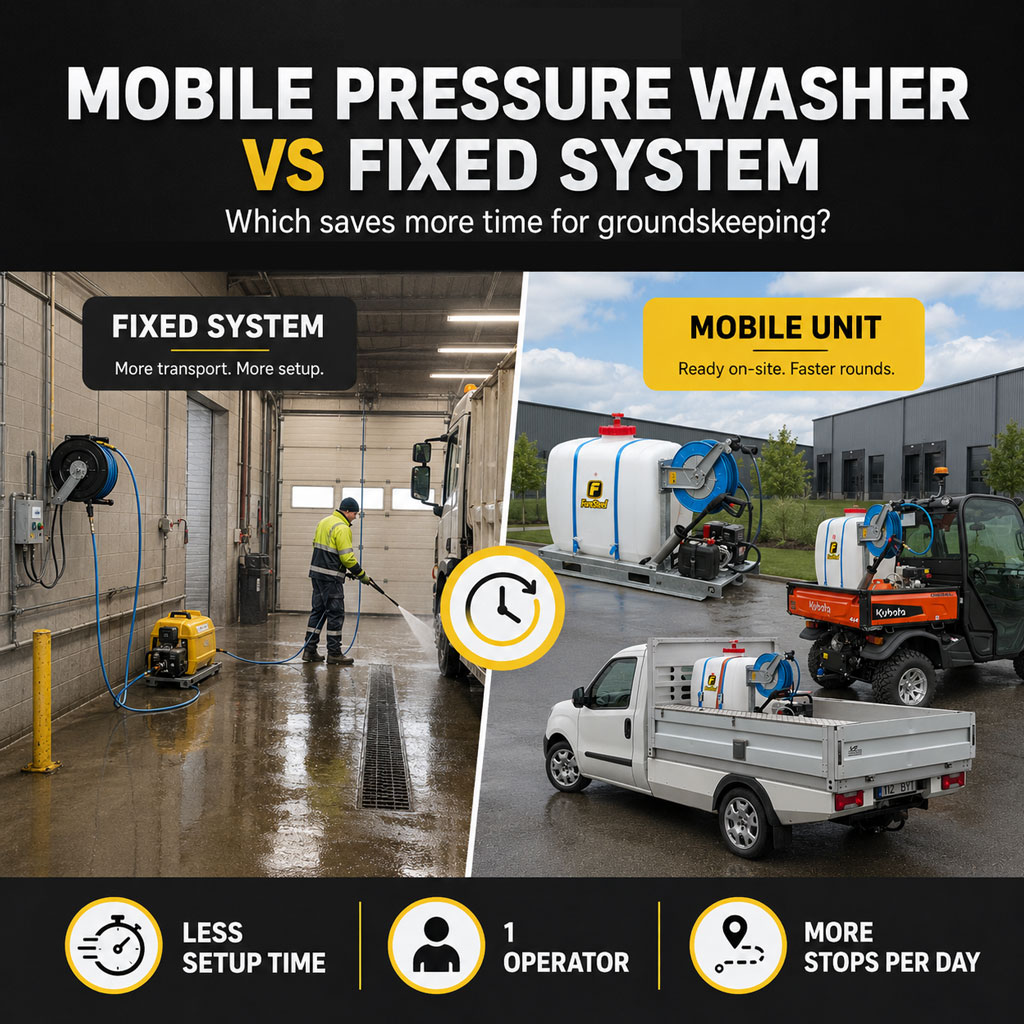
For professional groundskeeping teams with cleaning tasks spread across multiple locations, a mobile self-contained pressure washer almost always saves more time than a fixed installation.
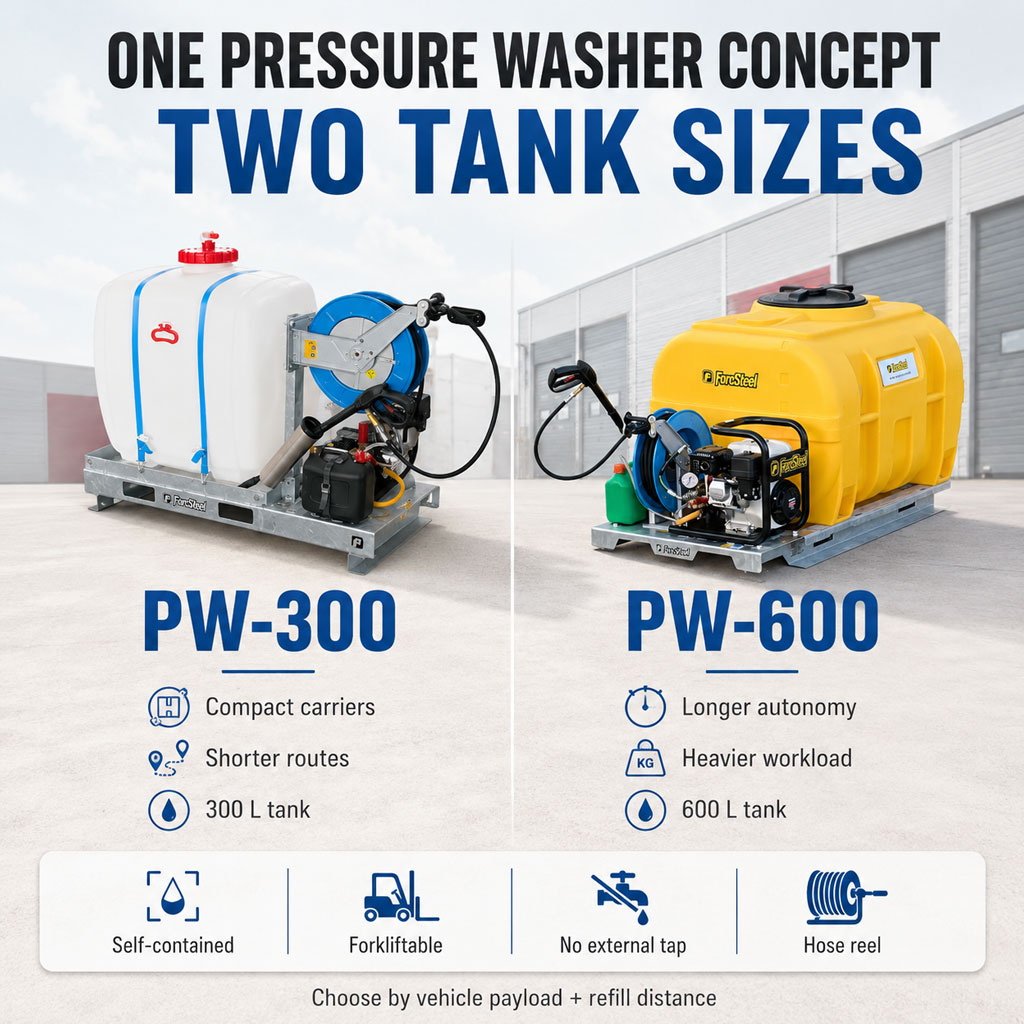
Not every cleaning job needs the same setup. The Foresteel PW-series is built around different tank sizes — from compact units for UTVs to larger setups for pickups and flatbeds. One concept, different capacities.
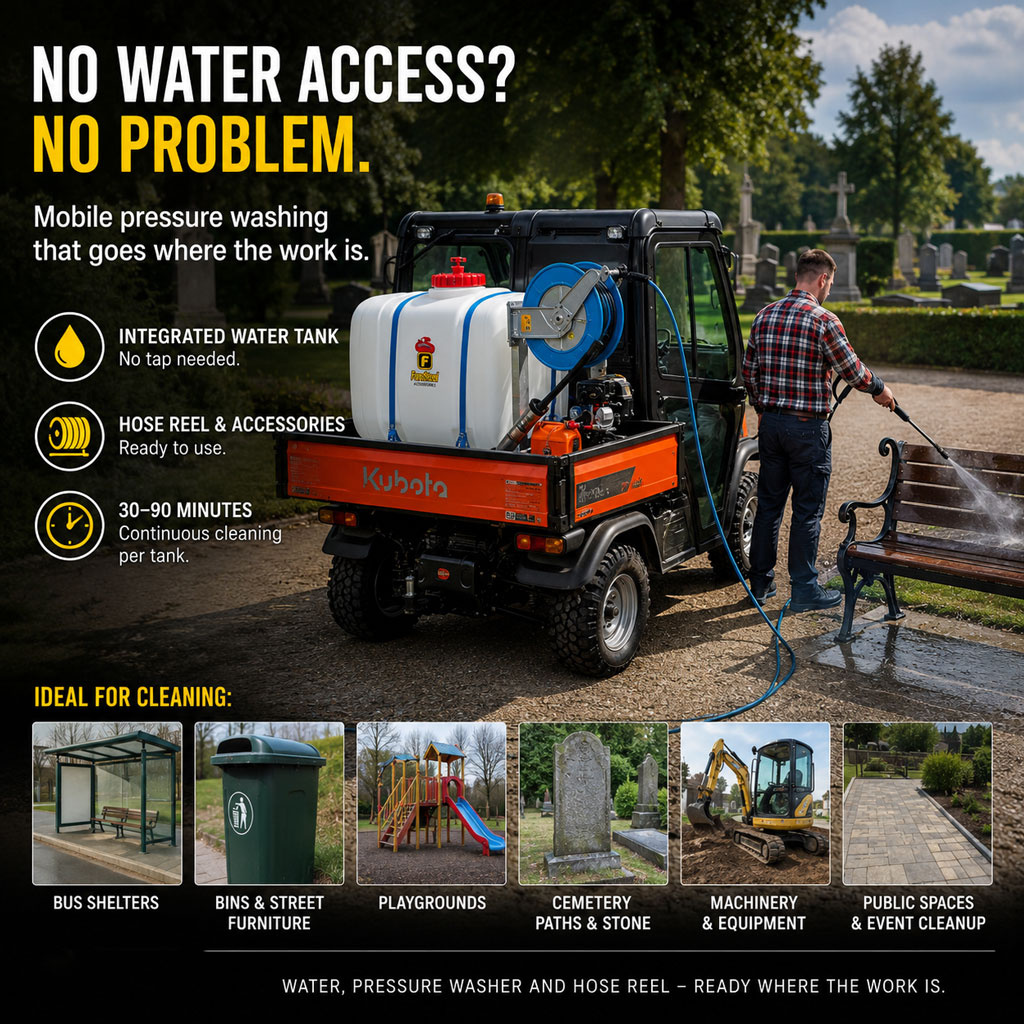
The places that need washing the most — park areas, cemetery paths, remote bin stations, machines parked outside, public spaces after events — are rarely next to a water point. A mobile pressure washer brings the water to the work.
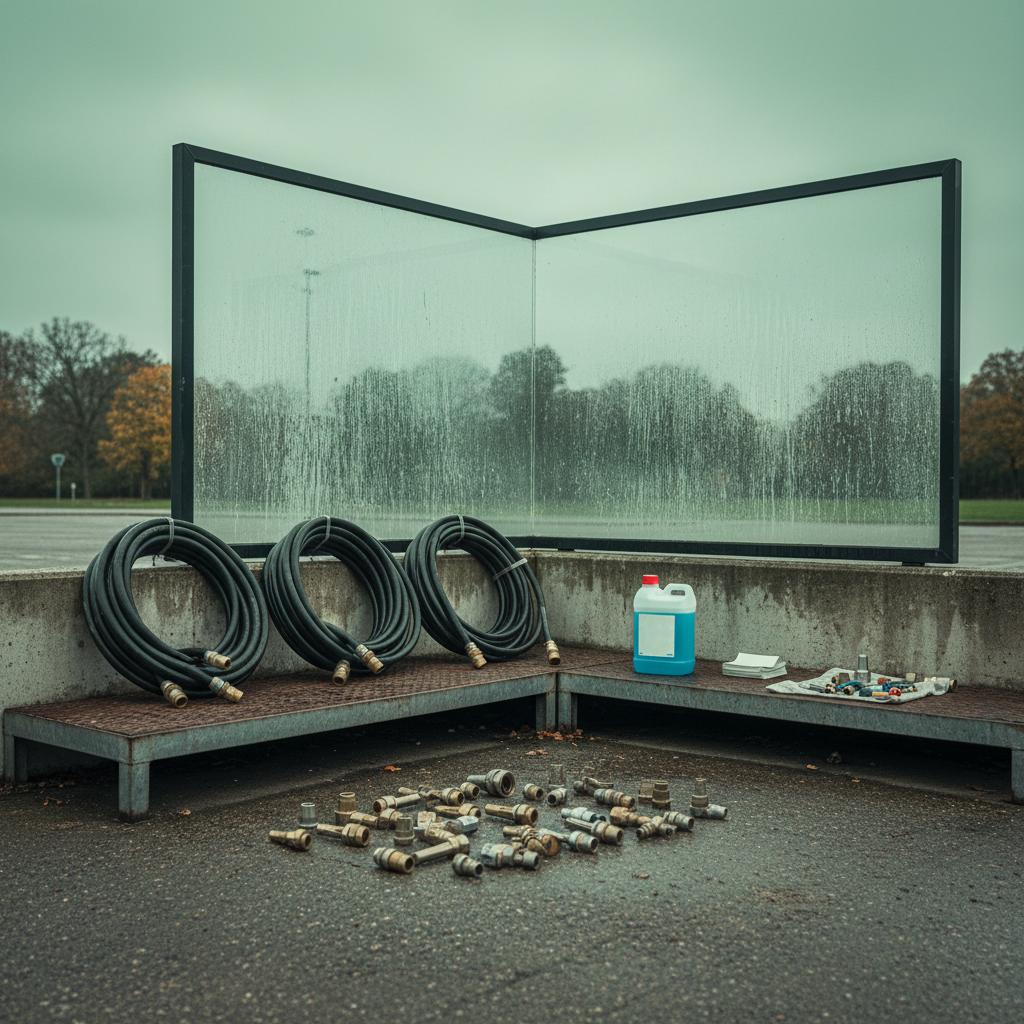
It starts as a quick washing job. Then someone needs to find the pressure washer, load the hoses, check fittings, arrange water access, grab detergent, and make everything fit in the vehicle. The actual washing takes 15 minutes. The preparation took an hour.
Welcome to the Foresteel Blog! Here, we share insights from our customers, educational materials, as well as tips and tricks to help you work more efficiently. Stay up-to-date with product updates and developments, and read inspiring customer stories to see how they use Foresteel in their work.
Join our community of users and learn how Foresteel can be your partner in productivity.

 Compact, efficient professional equipmentReduce labour. Lower costs.Made in Estonia, EuropeDelivered across Europe and beyondBuilt for daily work