



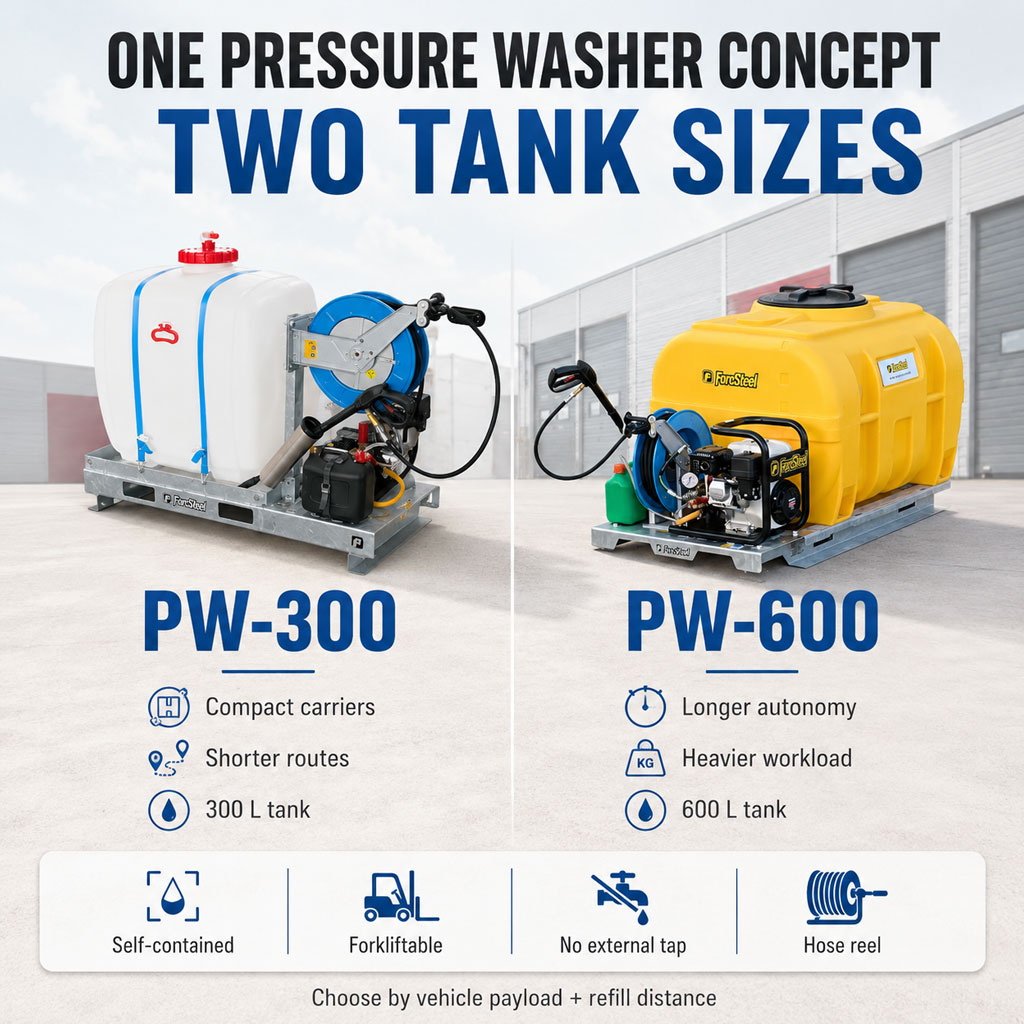
One Pressure Washer Concept, Different Tank Sizes: Matching PW-Series to Your Vehicle and Workload
Not every cleaning job needs the same setup. A quick daily wash on a compact campus route is a different task from a full-day municipal cleaning round across 30 kilometres of scattered infrastructure.
The Foresteel PW-series is built around one core concept — a self-contained mobile pressure washer with integrated water tank, pump, hose reel, and cleaning accessories on a compact steel frame. But it comes in different tank sizes so the capacity matches both the carrier vehicle and the work volume.
The Core Concept (Same Across All Sizes)
Every PW-series unit shares the same design principles. Self-contained: own water tank, own pressure pump, own hose system. No external water or power needed at the work site. Forklift pockets on the base frame for fast loading and unloading. Vehicle-agnostic mounting — the unit is not permanently installed; it moves between vehicles as needed. Optional chemical dosing tank for detergent applications.
The difference between sizes is tank capacity and the physical dimensions that follow from it.
Compact Units: For UTVs, Golf Carts, and Small Carriers
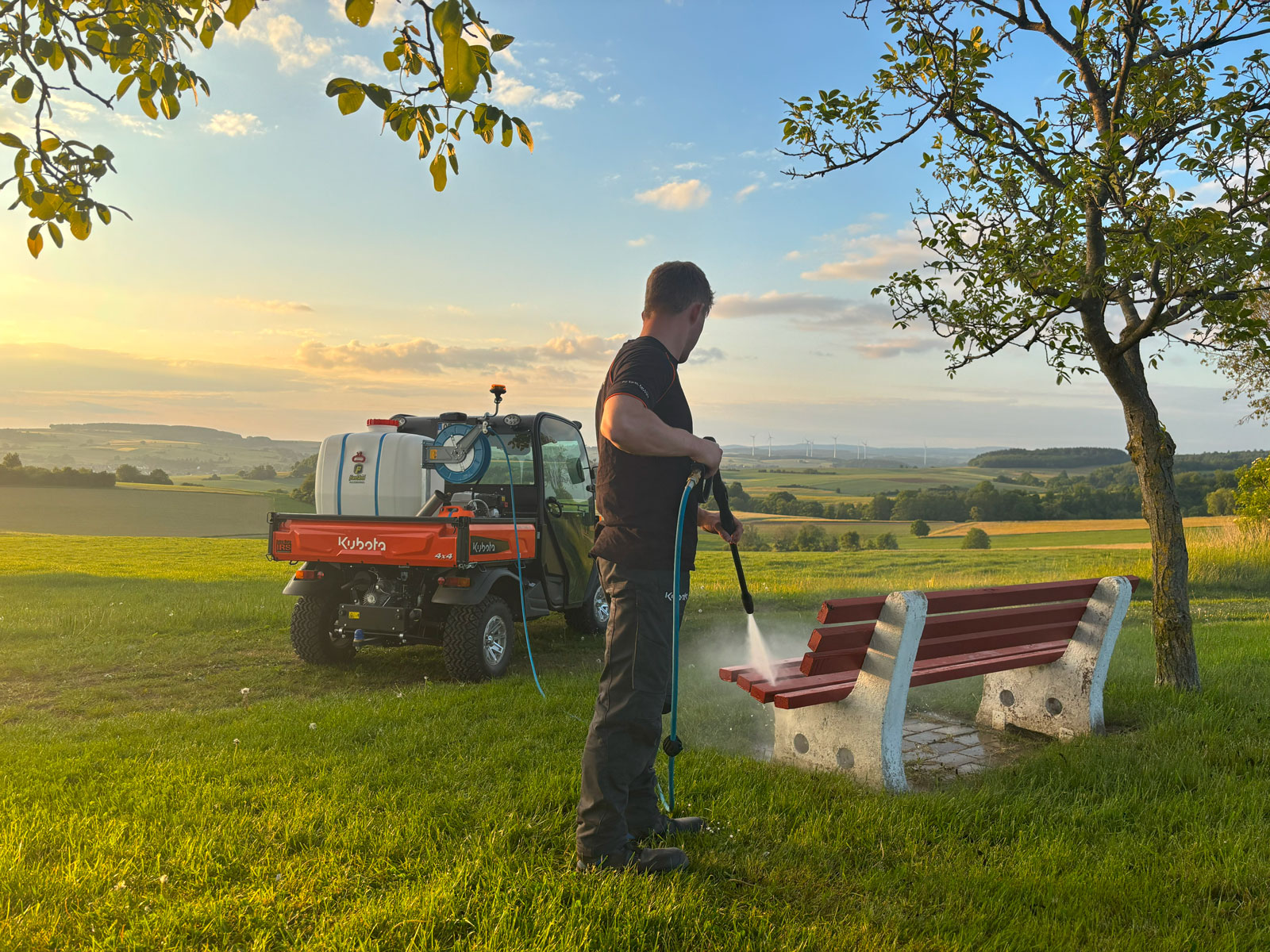
The smaller PW-series configurations are designed for compact carrier vehicles — utility vehicles like the Kubota RTV or John Deere Gator, golf carts, small electric utility vehicles, or the cargo area of a van.
With a smaller water tank, these units keep the total loaded weight within the payload limits of light vehicles. They suit operations with short routes, frequent refill access, or tasks where a smaller amount of water per stop is sufficient — daily spot cleaning, regular maintenance washes, or cleaning routes where stops are close together.
Typical use cases: campus maintenance (university, hospital, corporate grounds), small municipal cleaning routes, cemetery and memorial park upkeep, golf course facility cleaning, resort and hospitality property maintenance.
For Pickups and Standard Utility Vehicles
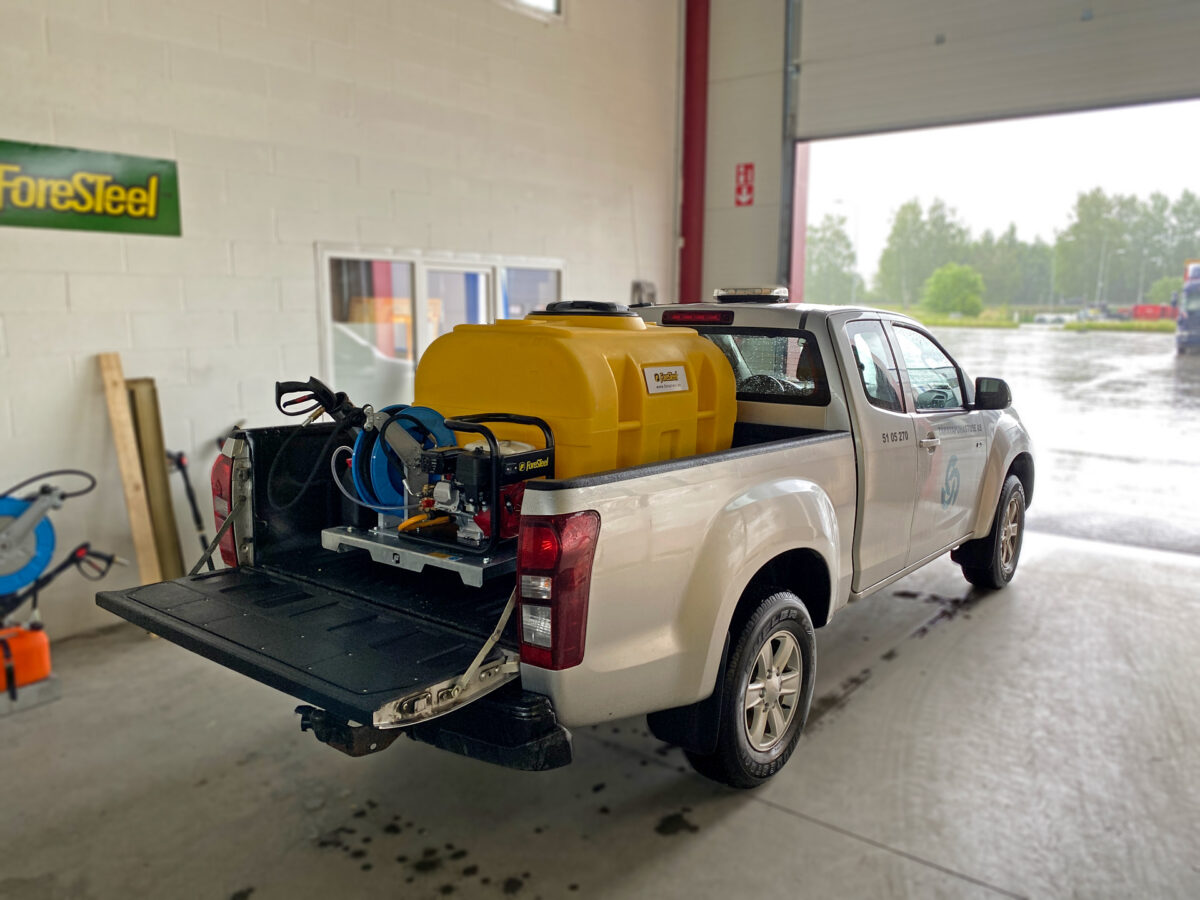
Configurations with the PW-300 balance tank capacity with vehicle compatibility. A 300-litre tank provides roughly 30–45 minutes of continuous washing — enough for 8–12 bus shelters, 3–5 playgrounds, or a morning’s cleaning route through a small town.
At approximately 380 kg when full, the PW-300 fits comfortably on standard pickups (Hilux, L200, Ranger), larger UTVs, and flatbed trailers. It is the most versatile size — capable enough for serious cleaning work, compact enough for a wide range of carrier vehicles.
Typical use cases: municipal bus shelter routes, playground cleaning circuits, contractor cleaning services, property management rounds, small fleet washing operations.
Large Units: For Extended Routes and Heavy Workloads
Larger configurations like the PW-600 carry 600 litres — roughly doubling the working time between refills. This matters most when refill points are distant, when the cleaning route is long, or when each stop requires more water (heavy grime, large surface areas, vehicle washing).
At approximately 710 kg when full, these units need a vehicle with appropriate payload capacity — standard pickups, flatbed trucks, or dedicated utility trailers. The additional weight is worth it for operations that cannot afford frequent refill interruptions.
Typical use cases: rural municipal routes with scattered infrastructure, fleet washing operations (3–7 vehicles per fill), equipment rental turnaround cleaning, large estate and campus maintenance, extended cleaning contracts across multiple sites.
How to Choose
Two questions decide the right size:
1. What vehicle will carry the unit?
UTV, golf cart, or electric utility vehicle → compact configuration
Standard pickup or large UTV → mid-range (PW-300 class)
Flatbed truck or dedicated trailer → large (PW-600 class)
2. How many stops between refills?
Quick daily rounds with depot access → compact is enough
8–15 stops across a morning route → mid-range covers it
Full-day routes or heavy washing per stop → large for maximum autonomy
If both answers point to different sizes, prioritize the vehicle constraint. The best pressure washer is one that actually fits on the vehicle your team uses every day.
One Unit, Multiple Vehicles
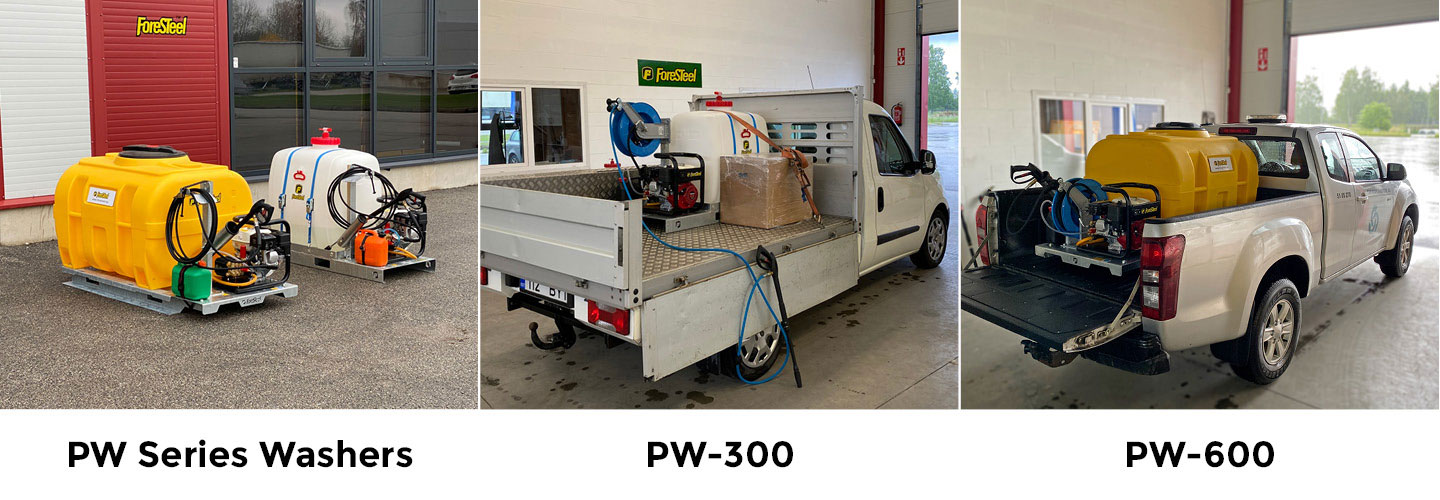
Because the PW-series uses forklift pockets rather than permanent installation, the unit moves between vehicles. Monday it rides on the pickup for a bus shelter route. Wednesday it loads onto the UTV for cemetery maintenance. Friday it sits on a trailer for a contractor job. This flexibility means the investment is not tied to one vehicle — it works across the fleet.
Foresteel PW-series — one concept, different capacities, mobile pressure washing where the job actually happens. Explore the range or tell us your vehicle and route details for a specific recommendation.

 Compact, efficient professional equipment