



No Water Access? No Problem: How Mobile Pressure Washing Works Without a Tap
The places that need pressure washing the most are almost never next to a water point.
A park area with grimy benches and algae-covered bins. A cemetery path with moss on the stone edging. A maintenance yard where machines sit exposed to weather. A bin station behind a residential block. A public space that needs cleaning after a weekend event. A bus shelter on a country road, kilometres from the nearest building.
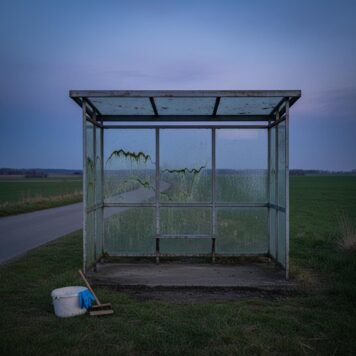
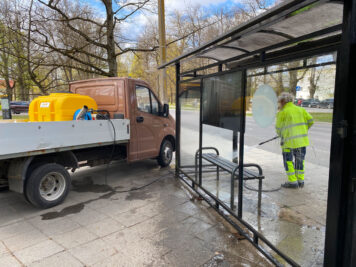
Traditional pressure washers need a water connection. That means either the work comes to where the water is (impractical for fixed infrastructure), or someone runs a long hose from the nearest building (time-consuming, creates trip hazards, often impossible over the distances involved).
This water access problem is the single biggest reason that cleaning work gets deferred, postponed, or skipped entirely in municipalities, estates, and contractor operations.
Bringing the Water to the Work
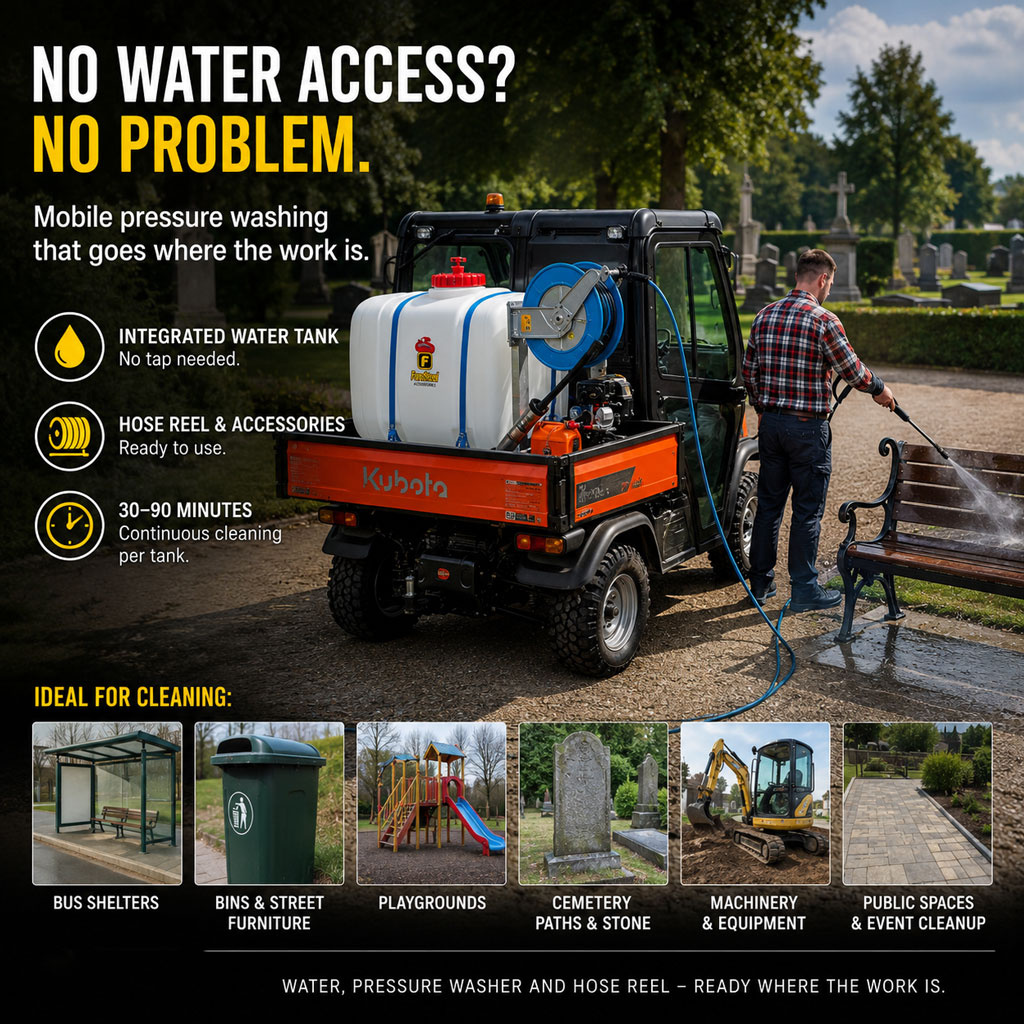
A self-contained mobile pressure washer eliminates the problem by carrying its own water supply. The Foresteel PW-series integrates a water tank, pressure washer pump, hose reel, and cleaning accessories into one compact mobile unit.
No tap needed. No hose from a building. No water bowser following behind. The unit is self-sufficient — load it onto any carrier vehicle, drive to the location, and start working.
Depending on tank size, a single fill provides 30–90 minutes of continuous washing — enough for multiple bus shelters, a full playground, several park furniture clusters, or a fleet of machines before needing to refill.
Where This Makes the Biggest Difference
Cemetery maintenance. Cemeteries are large, paths are long, and water taps are scarce. Moss on stone, algae on memorial surfaces, and bird droppings on benches are constant issues. Running a 100-meter hose between graves is impractical and disrespectful. A mobile unit on a small UTV or ATV handles cemetery cleaning discreetly and efficiently.
Park and public space cleaning. Benches, bins, shelters, playground equipment, and monuments are scattered across parks with no water infrastructure between them. A bus shelter cleaning route or a playground circuit becomes practical when the water travels with the operator.
Remote sites and machine washing. Construction equipment parked at a job site, agricultural machinery between fields, rental equipment at customer premises — none of these are near a wash bay. The mobile unit goes to the machine instead of the machine coming to a bay.
Event cleanup. After festivals, markets, and public events, surfaces need washing before normal use resumes. Event sites rarely have accessible water infrastructure for cleaning purposes. A mobile pressure washer handles post-event cleanup without depending on event water supplies.
Refilling Is Simpler Than You Think
A common concern: “What happens when the tank is empty in the middle of a route?”
In practice, refilling is straightforward. Any available water source works: a standpipe at a municipal depot, a fire hydrant connection (with permission), a garden tap at a willing property, a water bowser parked along the route, or a return to the depot that is already part of the daily schedule.
Most operators plan their cleaning routes to pass near a refill point naturally. With experience, they know exactly how many stops each tank fill covers and plan accordingly. It becomes routine within the first week of operation.
Choosing the Right Tank Size
The PW-series comes in different tank capacities to match different operations. Smaller tanks suit compact carrier vehicles (UTVs, golf carts) and shorter routes with easy refill access. Larger tanks suit pickups and flatbeds covering extended routes across a municipality or working in remote areas where refilling is less convenient.
The right choice depends on two things: the carrier vehicle’s payload capacity and the typical distance between refill opportunities on your route. For most municipal operations, the mid-range tank size covers a full morning’s cleaning route before needing a refill.
Foresteel PW-series — water, pressure washer and hose reel, ready where the work is. Built for parks, municipalities, contractors, farms, campuses and property maintenance teams. Tell us about your operation and we will recommend the right setup, or explore the range.

 Compact, efficient professional equipment