



From Manual Work to Machine Workflow: A Typical Municipality Upgrade Path
Most municipalities do not jump straight from manual raking to a fully equipped vacuum system. The transition usually happens in stages, driven by growing frustration with labor costs, difficulty hiring seasonal workers, and the realization that neighboring municipalities are doing the same work with half the crew.
Here is the typical upgrade path that municipalities follow — and the decision points at each stage.
Stage 1: Manual Methods (Where Most Start)
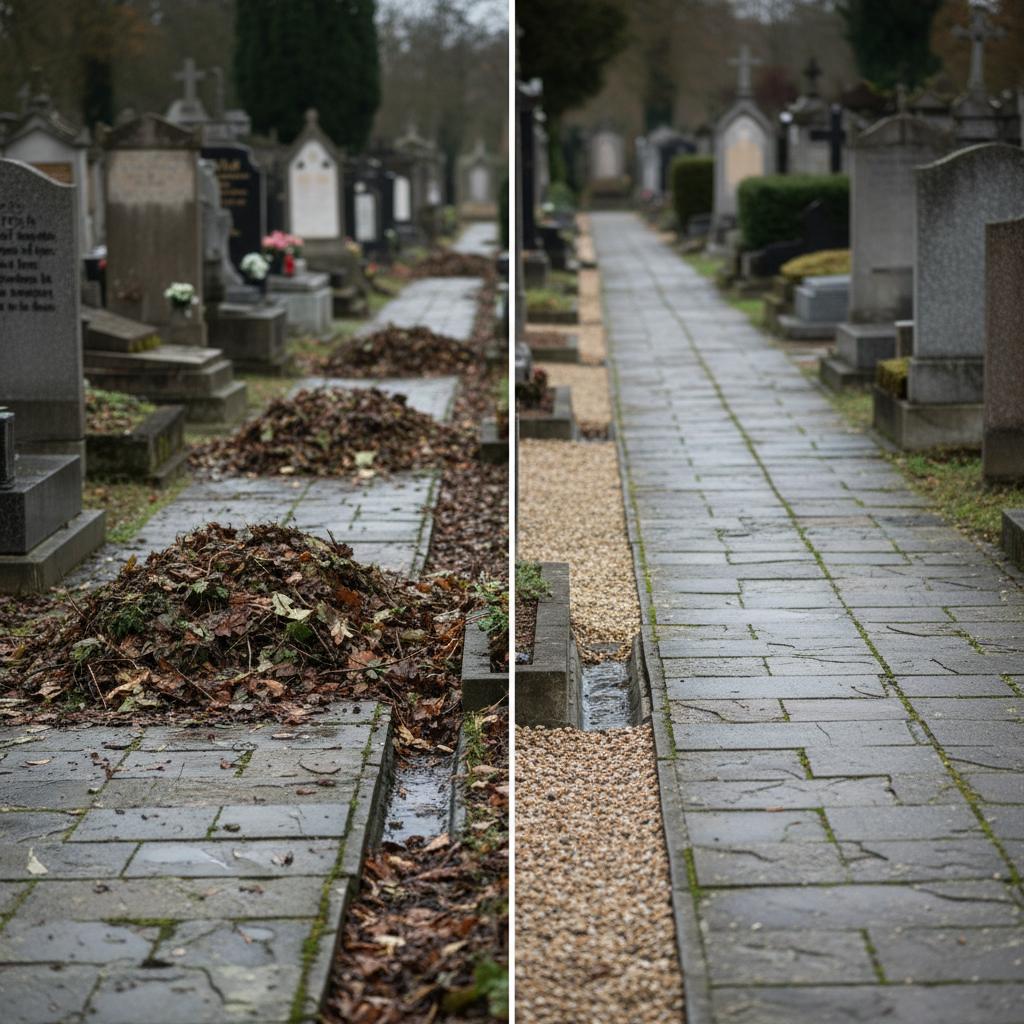
The crew uses leaf blowers, rakes, wheelbarrows, and a basic utility trailer. Two or three workers spend full weeks in autumn clearing parks, paths, schoolyards, and cemeteries. The work gets done, but it consumes most of the autumn maintenance budget in labor hours, leaving little capacity for other seasonal tasks.
Trigger for change: a key worker retires or leaves and cannot be replaced. Seasonal hiring becomes harder and more expensive. A neighboring municipality demonstrates a vacuum system at a trade fair or in shared service. Or the annual cost audit reveals that leaf cleanup consumes a disproportionate share of the maintenance budget.
Stage 2: First Machine Investment
The municipality purchases a compact leaf vacuum trailer — typically in the 2–2.5 m³ range — towed by the compact tractor or compact loader they already own. This single investment typically reduces leaf collection labor by 50–70% immediately.
The first season is eye-opening. Work that took 3 workers and 5 days now takes 1 operator and 2 days. The 2-in-1 trailer also handles soil and gravel transport in spring and summer, replacing an older utility trailer.
Common observations after the first season: the crew is surprised by how much time was previously wasted on loading and transport. The shredding function is the biggest revelation — the trailer holds far more material than expected. And the machine pays for itself in labor savings faster than the budget projection predicted.
Stage 3: Optimization
After 1–2 seasons, the operation optimizes. Routes are planned by proximity rather than improvised daily. The crew develops a system: blower for tight corners and edges, vacuum for everything else. Pre-season maintenance becomes routine. Dump site coordination improves.
Some municipalities at this stage add a mobile pressure washer to the same UTV or tractor setup, creating a multi-function grounds maintenance system that handles cleaning, leaf collection, and material transport with the same base vehicle.
Stage 4: Expansion (Larger Municipalities)
Growing towns or municipalities with expanding green space add capacity. This might mean a second compact trailer for a different zone, a larger trailer (3.5+ m³) for the main operator, a standalone debris loader for a crew that already has a dedicated transport trailer, or specialized setups for specific environments (cemetery, sports fields, roadside).
At this stage, the municipality is no longer thinking about whether mechanized collection works — they are optimizing how to deploy it across all their sites.
The Decision That Matters Most
The hardest step is Stage 2 — the first investment. After that, the benefits are obvious and every subsequent decision is informed by real experience. Municipalities that delay the first investment typically cite budget constraints, but the labor cost of continued manual methods almost always exceeds the equipment cost within 1–2 seasons.
The lowest-risk way to start is a compact 2-in-1 leaf vacuum trailer that works with equipment you already own. No new vehicle purchase required. Year-round utility from day one. And a clear, measurable productivity gain from the first week of use.
Ready to take the first step? Explore Foresteel compact leaf vacuum trailers or contact us for a setup recommendation based on your specific situation. Full background: Municipal Leaf Collection Guide.

 Compact, efficient professional equipment