



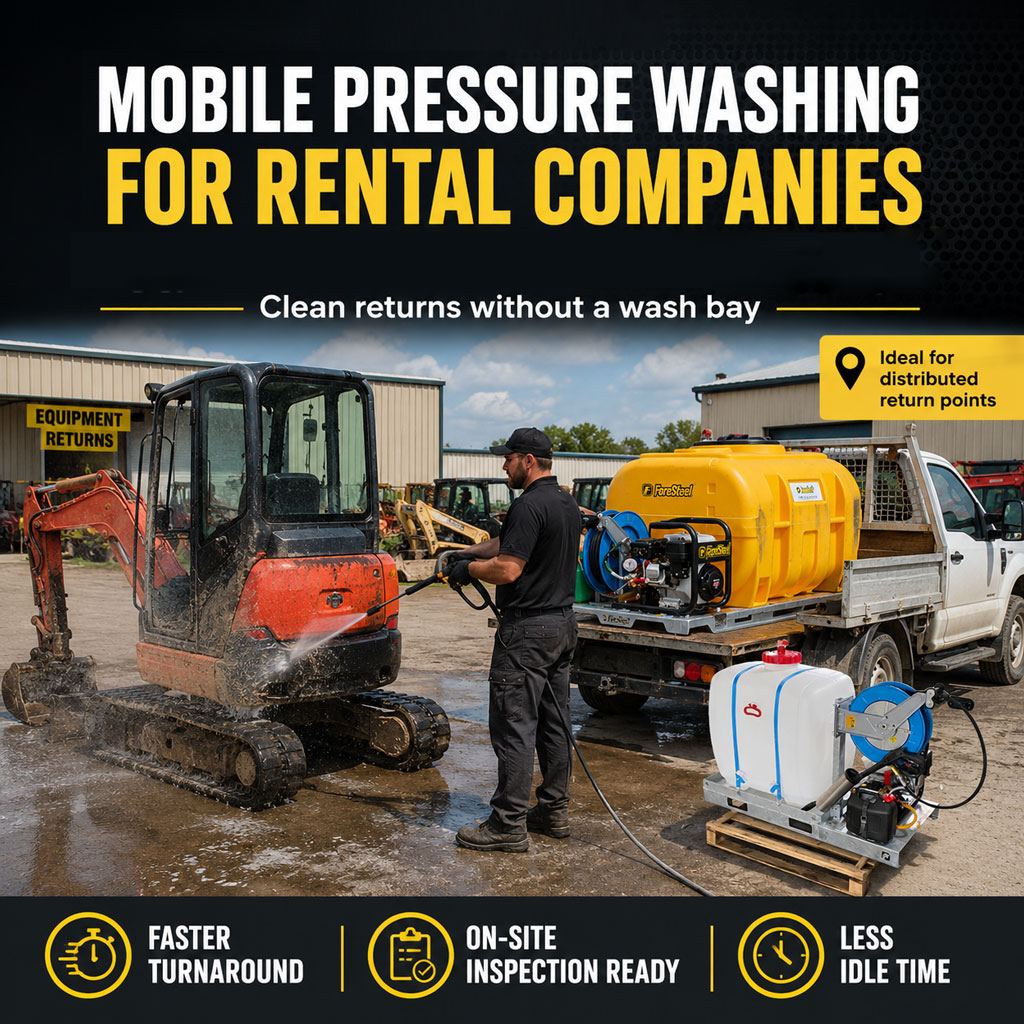
Mobile Pressure Washing for Equipment Rental Companies: Clean Returns Without a Wash Bay
Every piece of rental equipment returned dirty creates a bottleneck. The next customer expects a clean machine. The insurance documentation needs photos showing condition. And the inspection that catches damage before it becomes a disputed claim requires a clean surface to see properly.
For rental companies with a dedicated wash bay at the main depot, turnaround cleaning is straightforward. But the reality of modern equipment rental is more distributed: machines get returned to satellite yards, customer sites, or picked up from locations that are nowhere near the depot. Building a wash bay at every return point is not economical. Trucking dirty machines back to the main depot just for cleaning wastes time and money.
The Rental Turnaround Problem
A typical equipment rental business faces this cycle: machine returns dirty from a construction site. It needs cleaning before inspection. Inspection determines condition and any damage charges. Machine gets listed as available. Next customer picks up or receives delivery.
If cleaning requires driving the machine to a wash bay, every return adds transport time, driver cost, and scheduling dependency on wash bay availability. During busy seasons, wash bay queues can delay turnarounds by a full day — meaning the machine sits earning nothing while waiting to be cleaned.
Mobile Cleaning at the Return Point
A self-contained mobile pressure washer goes to the machine instead. Load the unit on a pickup or utility vehicle. Drive to the return location — whether that is a construction site, a satellite yard, or a customer’s premises. Clean the machine on the spot. Photograph the condition. Log the return. The machine is inspection-ready without moving it anywhere.
For rental companies managing 20–50 active machines across multiple locations, this removes the entire wash bay bottleneck. Returns are processed where they happen, not where the plumbing happens to be.
What Gets Cleaned
Rental equipment cleaning typically involves removing soil, mud, and concrete splatter from excavators, loaders, and dumpers. Degreasing engine bays and hydraulic areas for inspection access. Cleaning operator cabs (exterior wash; interior detailing is separate). Removing paint, adhesive residue, and marking from generators and portable equipment. And washing down trailers, platforms, and access equipment before the next hire.
A 600L tank provides enough water for 3–5 machines depending on soil level. Heavy mud on an excavator uses more water per machine than surface cleaning a generator. Plan tank capacity around your typical return mix.
The Business Case
Faster turnarounds mean higher utilization rates — the key profitability metric in equipment rental. If mobile cleaning saves even one day of idle time per machine per month across a 30-machine fleet, the revenue impact far exceeds the cost of the pressure washer.
Additionally, consistent cleaning-at-return means every machine gets inspected in clean condition immediately. Damage gets documented before the customer leaves. Disputes drop. Insurance claims are cleaner. And the fleet maintains a professional appearance that justifies premium rental rates.
Equip your turnaround process: See the Foresteel PW-600 (recommended for rental fleet operations) or PW-300 for smaller operations. Read more about mobile fleet washing without a fixed bay.

 Compact, efficient professional equipment