



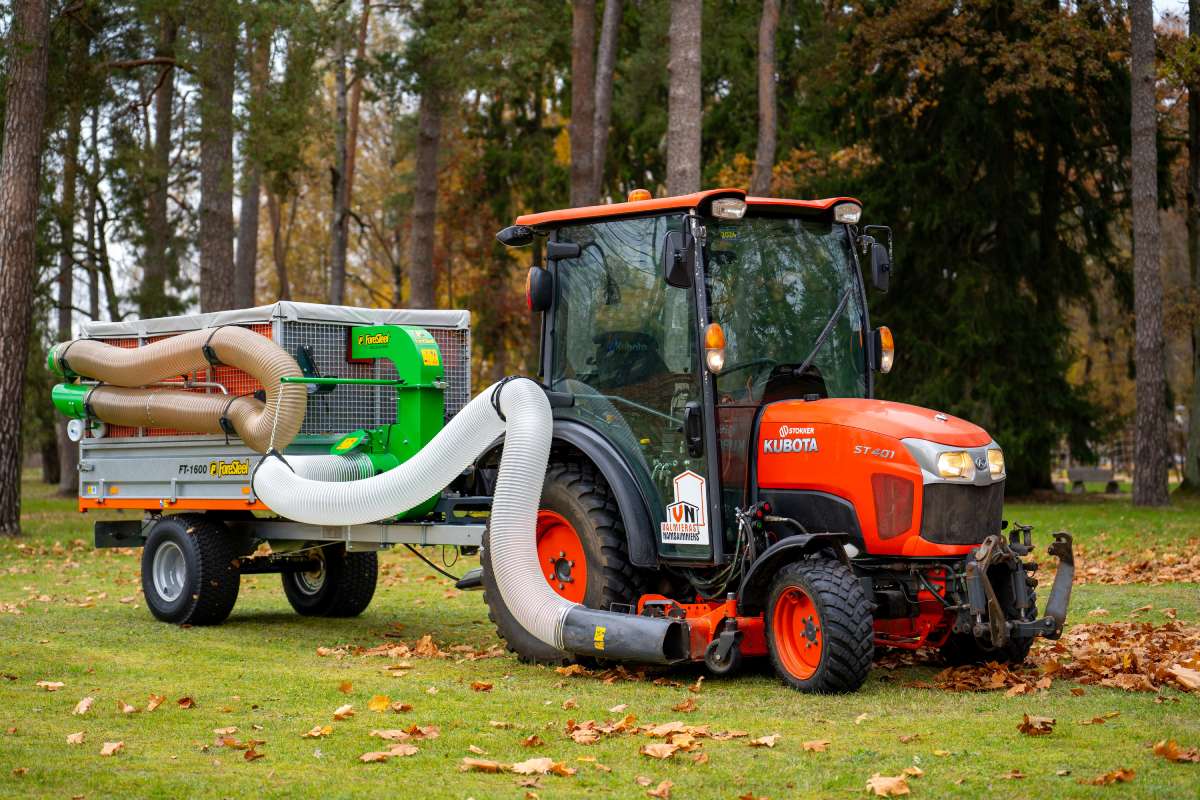
A Foresteel leaf vacuum trailer works in three ways: with the handheld suction nozzle, connected to the host machine’s mowing deck, or with the underframe suction unit. Of the three, the mowing deck connection is the fastest when conditions allow. One pass mows, collects, shreds and compacts.
Getting that setup right comes down to three things: where the vacuum unit sits on the trailer, how the hose connects to the deck, and whether the system is getting enough air. This article covers all three.
In short
- The G2 debris loader can be mounted in standard position (inlet facing sideways) or rotated 90° (inlet facing forward).
- Forward-facing is the better choice for mostly-deck work: shorter hose run, gentler bend, tighter turning. The trade-off is less convenient handheld nozzle use.
- The unit is fitted in standard position in our factory before dispatch, if not specified otherwise.
- Use an OEM deck adapter where one exists. Where it does not, our universal boot adapter fits most side-discharge decks.
- The universal adapter is cut to fit at installation. A separate, optional airflow cutout is added later only if clogging appears.
1. Two vacuum positions on the trailer
The G2 debris loader is mounted on the trailer with the suction hose inlet facing either sideways or forward.
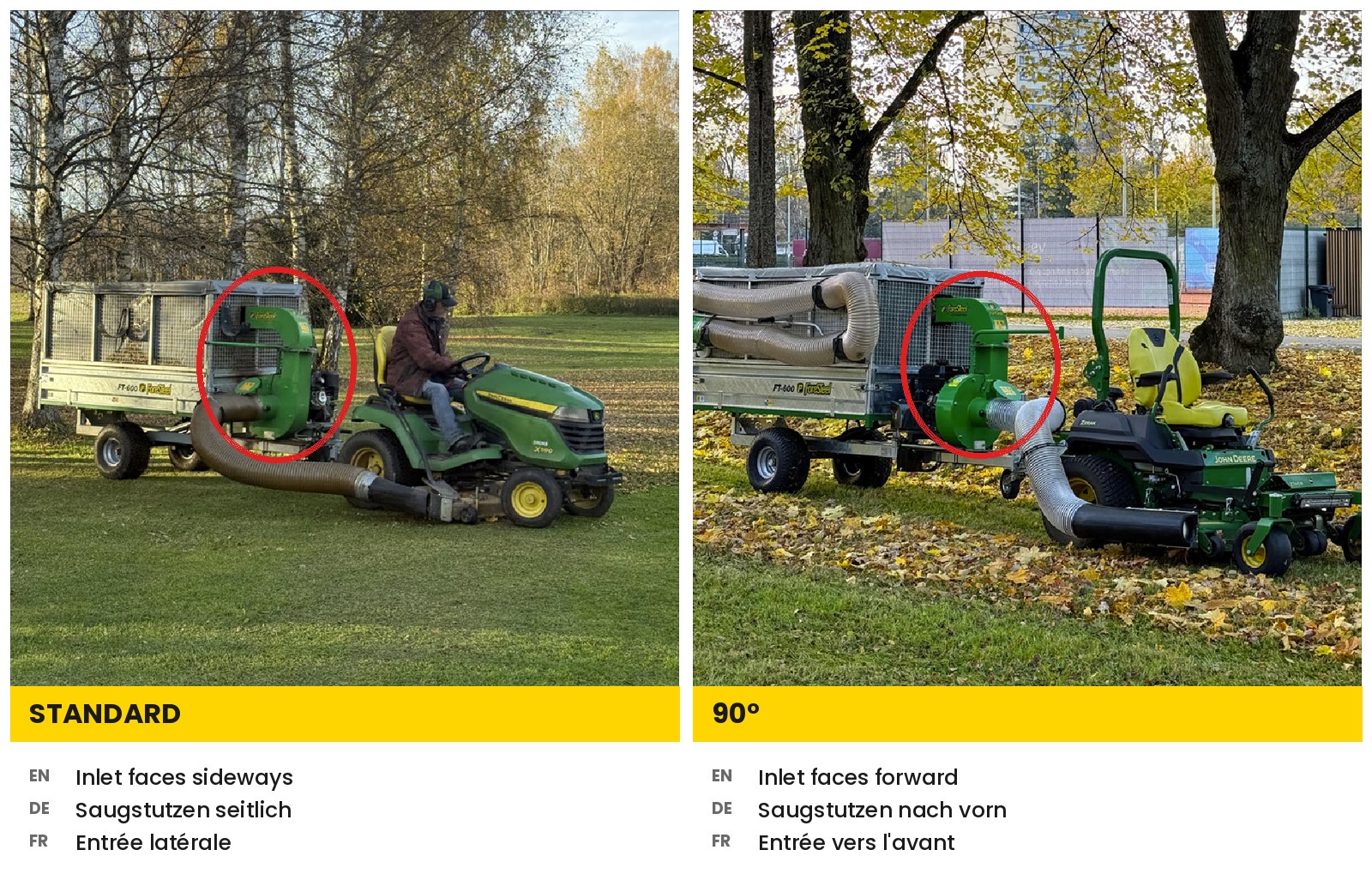
1. Standard position — side-facing inlet
The inlet points across the trailer. This is how most units leave the factory, and it is the more comfortable position for handheld nozzle work, because the hose comes off the unit on the side where the operator works.

2. Optional with Gen 2: 90° rotated — forward-facing inlet
The unit is turned so the inlet points forward, towards the towing machine. In a mowing deck setup this matters: the hose runs almost directly from the deck to the inlet instead of looping around to the side. The run is shorter, the bend is gentler, and the hose stays closer to the machine when turning.
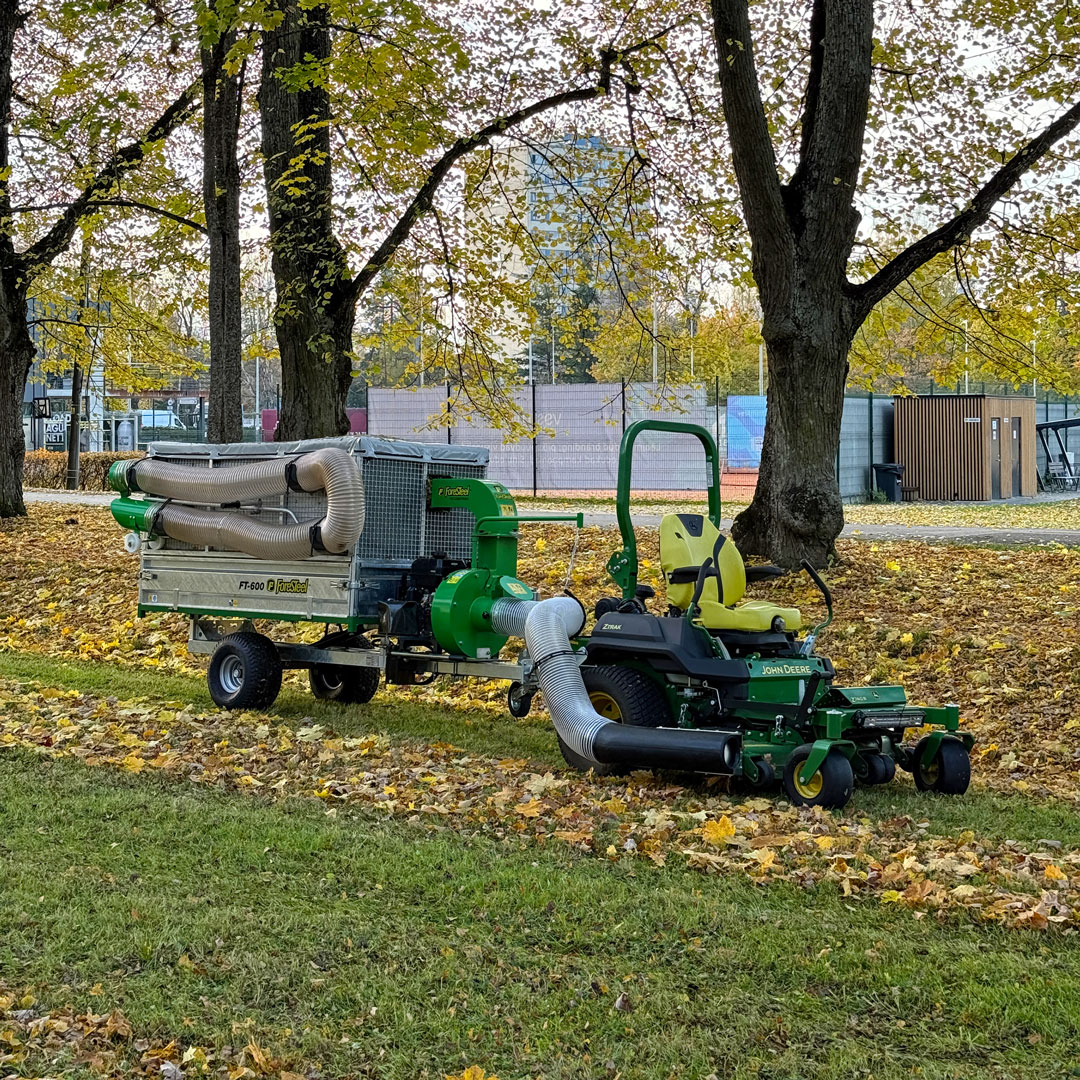
Two practical consequences:
- Better manoeuvrability. Less hose slack behind the mower means tighter turns around trees, beds and paths without the hose fighting the machine.
- Lower clogging risk. Every metre of hose and every sharp bend costs airflow. A shorter, straighter run keeps debris velocity up. Clogging is already uncommon on these systems, because the hose run is short and the G2 unit moves a large volume of air — but wet leaves and heavy grass are exactly where geometry earns its keep.
The trade-off is real: with the inlet facing forward, swapping over to the handheld nozzle is less convenient.
2. Which position should you order?
The vacuum position is set in our factory before dispatch, so it is worth deciding at order stage.
- Mostly mowing deck collection on open green areas — order the 90° position.
- Roughly half deck work, half handheld around pavements, kerbs, hedge rows and beds — keep the standard position.
- Not sure — we deliver in standard position. Both working methods remain fully usable either way. The choice is about comfort and efficiency, not capability.
3. Connecting the hose to the mowing deck
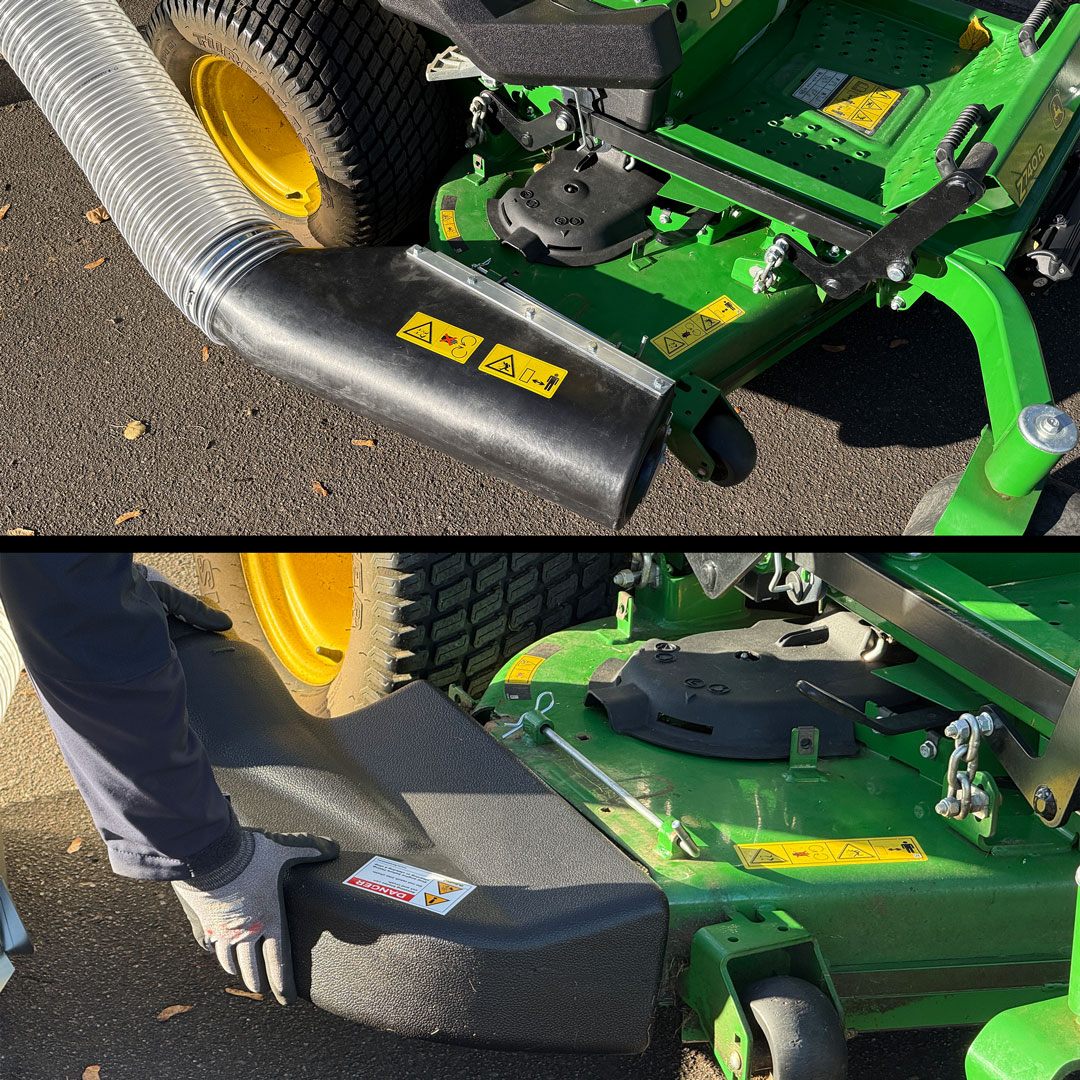
The hose does not attach to the deck directly. It attaches to a boot adapter fitted over the deck’s side-discharge opening.
OEM adapters first
Where the mower manufacturer offers a collection or discharge adapter for that specific deck, use it. It is plug-and-play, the fit is exact, and it is designed around that deck’s discharge geometry. John Deere, Kubota and several other manufacturers offer them. This is our standard recommendation.
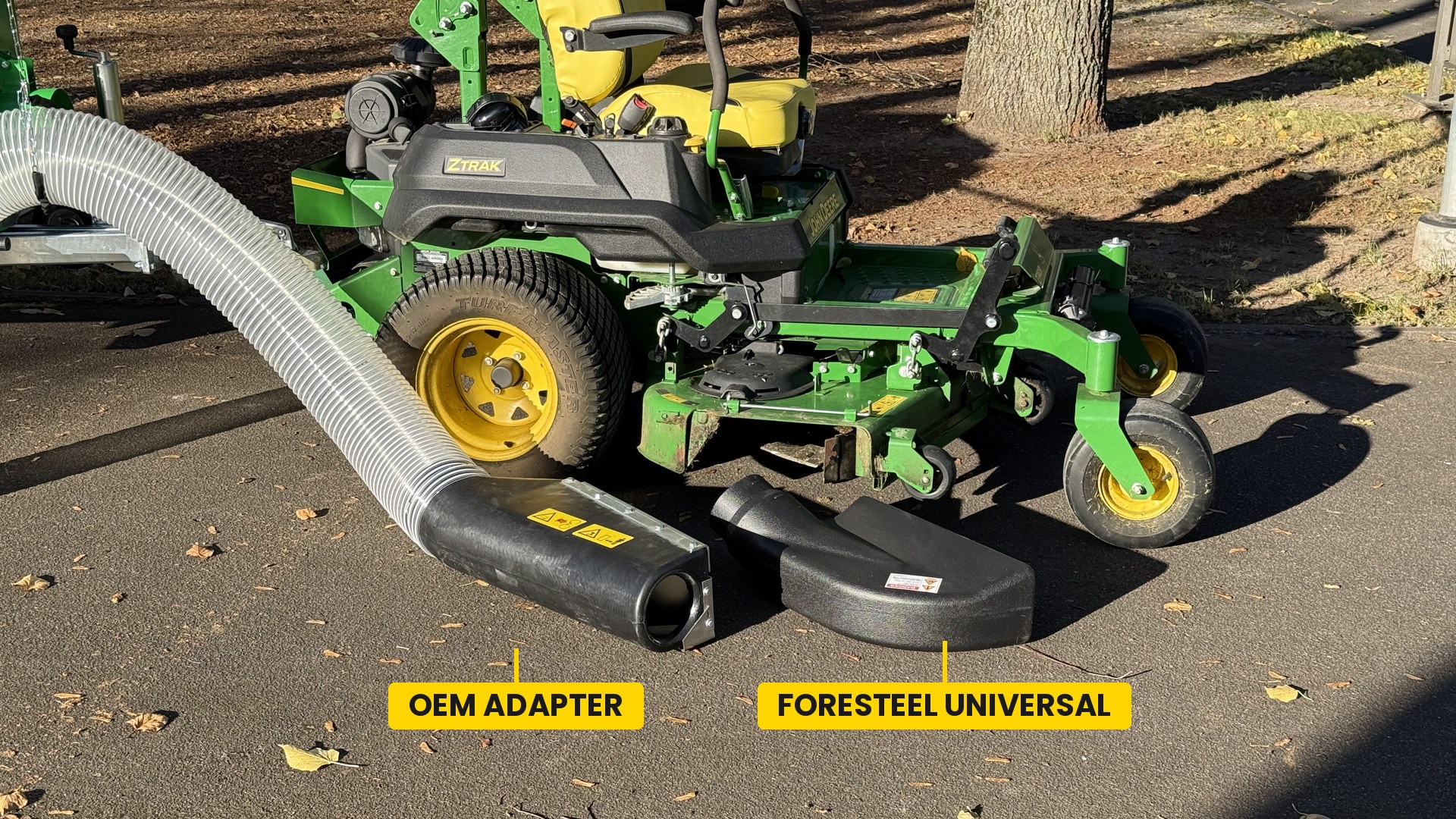
Universal adapter where no OEM part exists
For decks with no OEM option, we supply the Foresteel Universal Mowing Deck Boot Adapter (VAC-DECK-ADAPTER), sized L510 × H160 mm and fitting a 180/200 mm suction hose. It is supplied closed and is cut to fit at installation: you open it at the point where the deck throws grass and leaves out, so the flow path into the boot is unrestricted. Some cutting and light drilling is part of the job. It’s a DIY fitting, requiring some custom flange/bracket suitable for your mowing deck fixtures.

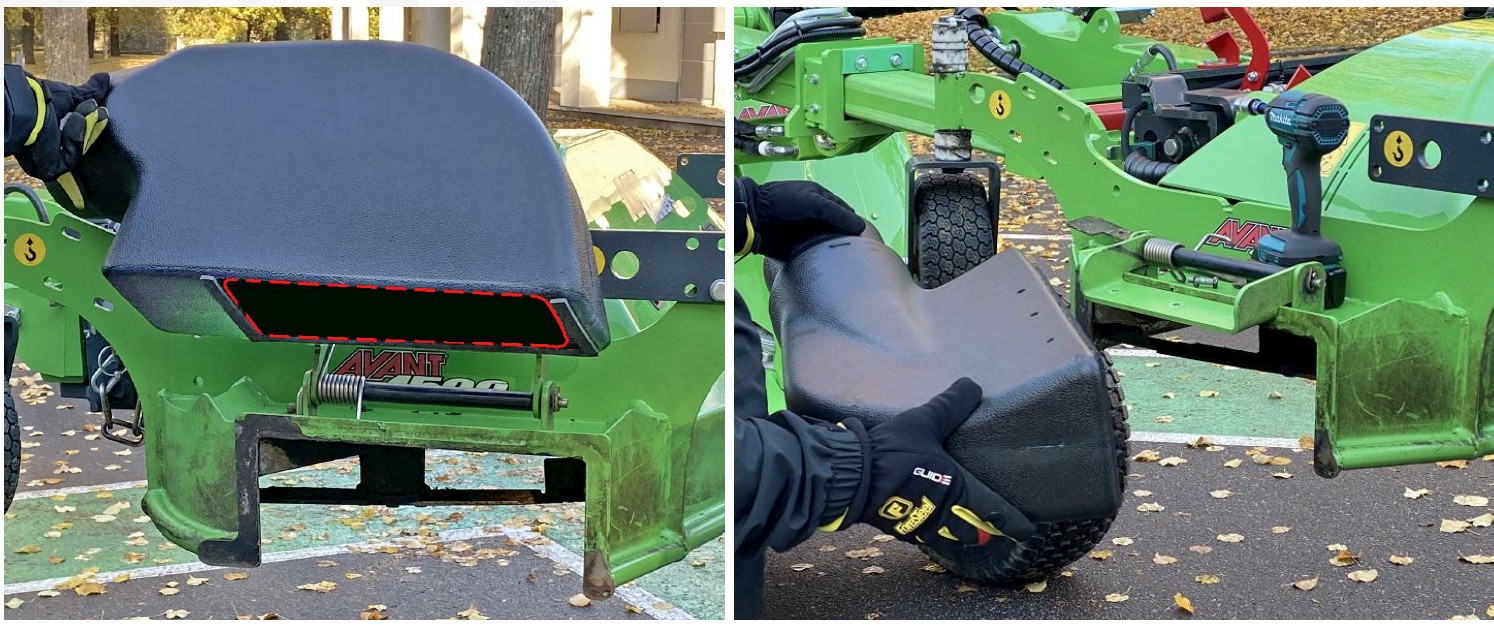
Fitting in summary:
- Hold the adapter against the side-discharge chute and mark the position so the flow path is not restricted.
- Plan the fixing method before cutting. The adapter must not sit lower than the deck itself, or it will contact the ground.
- Mark and cut the opening at the discharge throw area — as large as practical to minimise restriction — and drill the fixing holes.
- Bolt it down, using large washers or a backing plate to protect the plastic and extend its life.
- Slide the suction hose onto the outlet and tighten the clamp.
- Run the machine and check the result.
Instructions ship with the adapter. If you would rather have the hose supplied with it, see the mowing deck adapter set with 3.5 m suction hose. The hose supplied can be extended on request.
4. Airflow: why some boots have a hole in the front
Look at most OEM collection boots and you will find a cutout on the front-facing side on many different models. That is not a manufacturing shortcut — it is there on purpose.
A vacuum system moves debris with fast-moving air, not with suction alone. The deck’s job is to throw material into the boot; the vacuum’s job is to carry it up the hose, shred it and compact it into the trailer. If the deck is tightly enclosed, air cannot enter freely, air speed drops inside the hose, and material starts to settle instead of travelling. Wet grass and wet leaves are where this shows up first.
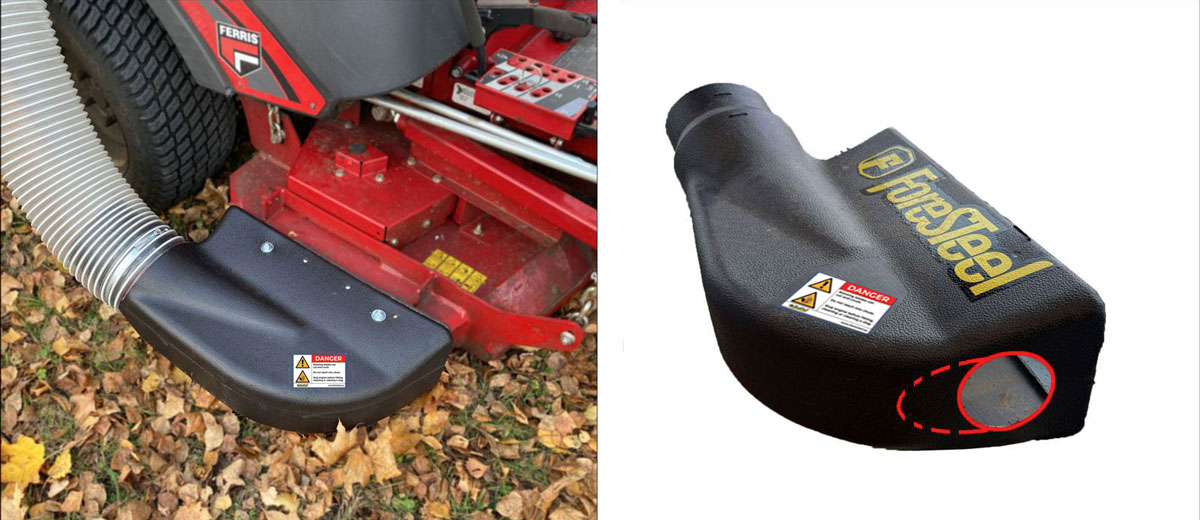
The airflow cutout is not a step to do up front. Many decks never need it.
- Run the adapter as fitted first. If it stays clean under normal and heavy conditions, leave it alone.
- If clogging appears inside the boot, cut an opening of roughly 8 cm diameter on the front-facing side, clean and clear of mounting surfaces and structural elements.
- Retest, and trim further only if airflow still needs improving.
This is more commonly required on larger and wider decks, where the sheer volume of leaves and grass makes air speed the limiting factor.
5. Mowing deck setups in use
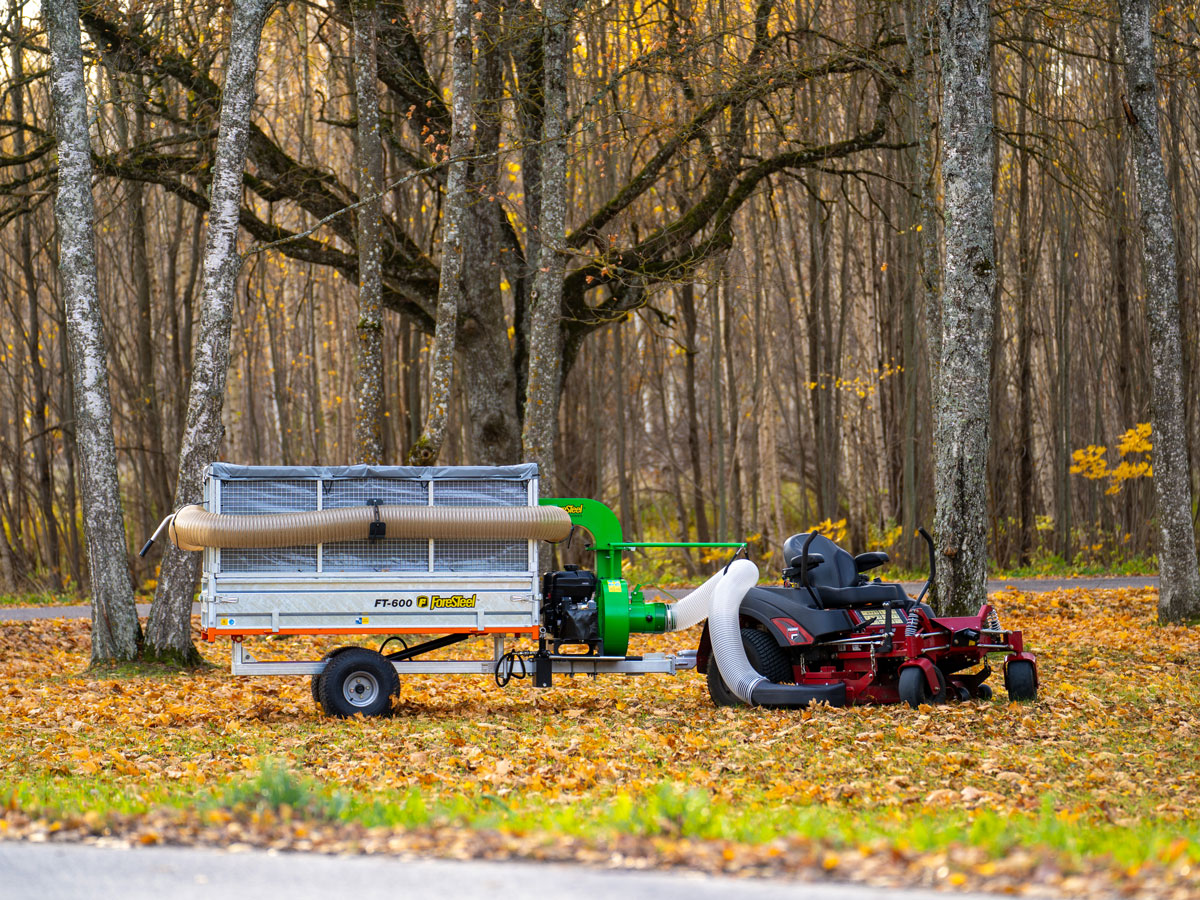
The same principle works across compact tractors, compact loaders, zero-turn mowers and garden tractors. A few examples:
More host machine pairings:
- FT-1600 with Avant — mow, vacuum and shred on a compact loader
- FT-1600 with Kubota — mow, vacuum and shred on a compact tractor
- FT-1600 with Avant — grass collection in mowing deck setup
- FT-600 with John Deere ZTrak — zero-turn pairing
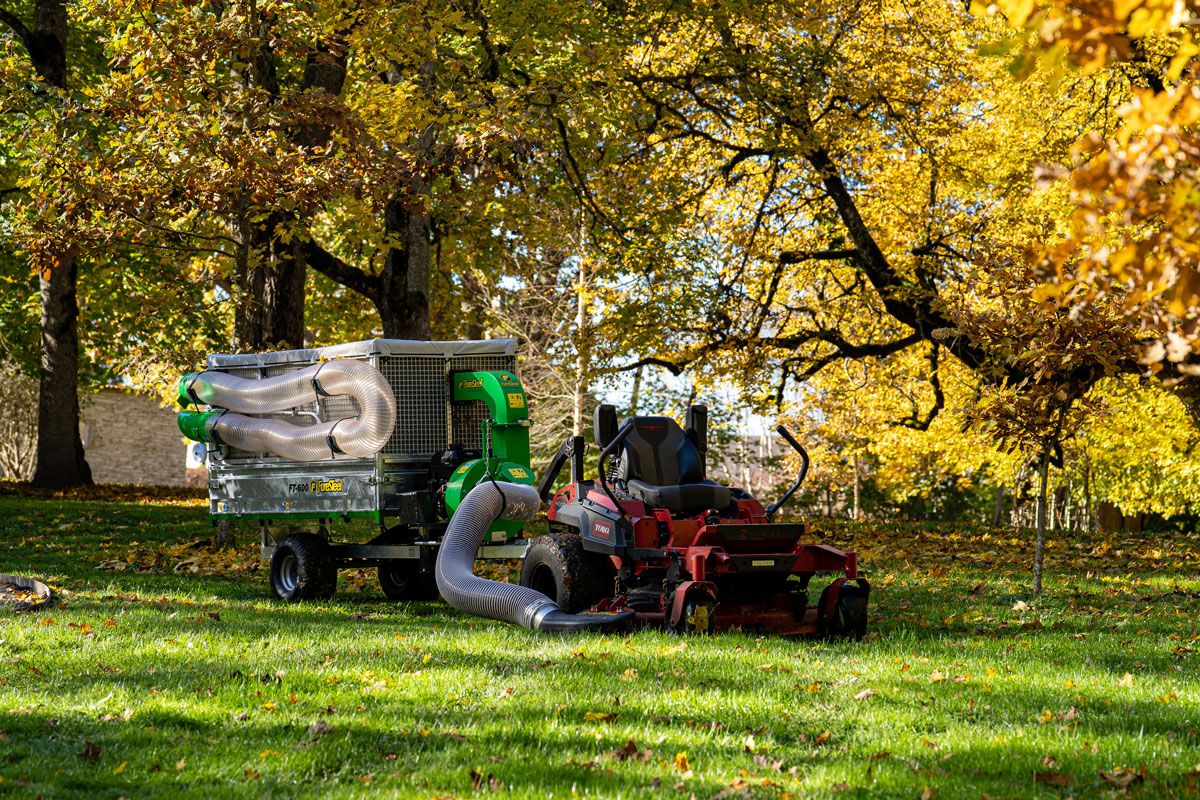
- FT-600 with Toro Z-Master 4000 — zero-turn pairing at Kirna Manor
- FT-600 with Cub Cadet — zero-turn pairing
- FT-600 with Ferris ISX 800 — zero-turn pairing, with manual hand-pump tipping shown
- FT-600 with John Deere X748 — garden tractor pairing
- Leaf trailer with MultiOne — demo day footage
Ordering notes
If you are specifying a leaf vacuum trailer for mostly deck-based collection, tell us at order stage and we will set the vacuum in the 90° position and confirm which adapter route suits your deck. If you are buying a host machine at the same time, a deck-equipped configuration is worth prioritising — the difference in daily output is substantial.
Product pages: FT-600, FT-1600, FT-2200 T3.
Contact us for configuration advice and pricing.


 Compact, efficient professional equipment