



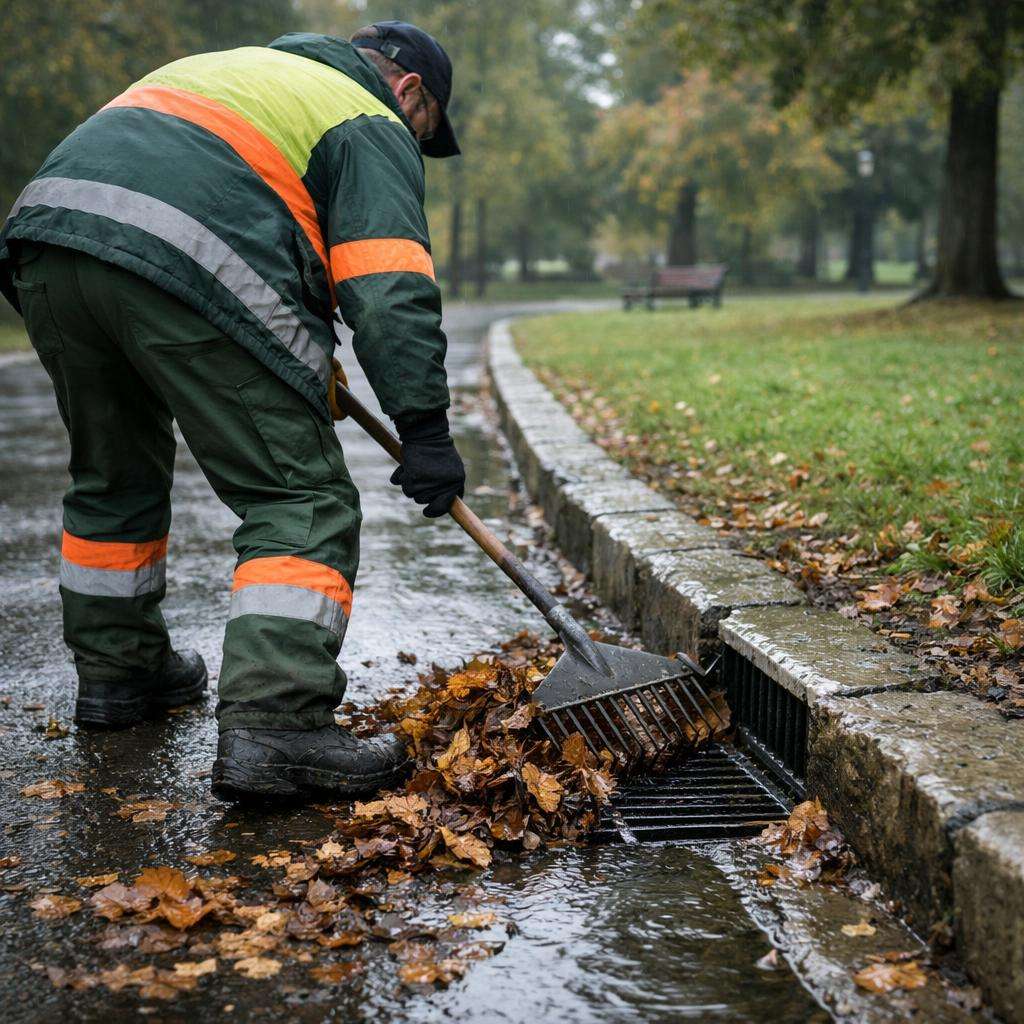
How to Collect Wet Leaves Efficiently Without a Large Crew
Wet leaves are where most leaf cleanup methods start to break down. They cling to the ground, resist blowing, form heavy layers, and fill containers faster than dry material. A job that looks manageable on a dry autumn morning becomes twice as slow after overnight rain.
The solution is not more workers or more powerful blowers — it is eliminating the handling steps that wet conditions make so much worse. Direct vacuum collection into a shredding trailer or debris loader keeps a small crew productive even in the heaviest conditions.
Why Wet Leaves Create Such a Slowdown
Wet leaves are heavier, denser, and stickier than dry ones. This affects every step of the traditional cleanup process. Blowers lose effectiveness because wet leaves resist airflow and cling to surfaces. Raking becomes harder because the material sticks and tears. Piles are harder to form and hold shape. Manual loading takes more effort per wheelbarrow or forkful. And transport containers fill faster because wet material does not compress as well.
The net result is that wet conditions can double the labor required for the same area compared to dry conditions — if you are using manual methods.
The Main Problem Is Double Handling
Most teams lose time not because their equipment is too weak, but because they handle the same material multiple times. Blow it into piles. Rake the piles tighter. Load them into a wheelbarrow or onto a trailer. Transport. Dump. Return. Start over.
Each step is a separate labor task. In wet conditions, each step takes longer. The total time compounds quickly across a full day.
The most efficient approach eliminates as many of these steps as possible by collecting material directly into the transport container as the work happens.
What a Faster Wet-Leaf Workflow Looks Like
An optimized wet-leaf workflow uses direct suction collection — the vacuum draws material from the ground or from loose piles directly into a trailer or collection body. The shredder reduces volume even on damp material, extending the working interval between dump trips. One operator drives the route, vacuuming as they go. When the trailer is full, they tip at the dump site and return.
No separate blowing step. No separate loading step. No separate pile-building step. The material goes from the ground to the container in one action.
This approach works whether using a leaf vacuum trailer (where the trailer and vacuum are integrated) or a debris loader connected to a separate collection body.
Equipment Features That Matter Most for Wet Leaves
Not all vacuum systems handle wet material equally well. When evaluating equipment for wet-leaf performance, focus on suction volume — measured in m³/min or CFM, this determines the system’s ability to pull heavy, wet material. Hose diameter matters because larger hoses (200mm / 8 inches and above) resist clogging with clumped wet leaves. Impeller design affects whether the machine processes damp material smoothly or struggles with buildup. Housing durability is critical because wet material is more abrasive than dry — wear-resistant steel in the housing extends service life. And easy cleanout access matters because at the end of a wet day, you need to clean residue from the system without disassembling it.
Practical Tips for Wet-Leaf Days
Prioritize areas where drainage blockage is the real risk — paths near drains, gutters, and low-lying areas where water pools. Wet leaves block drainage faster than they create aesthetic problems, so focus on function first.
Work slightly slower and let the vacuum do the work rather than forcing material through the hose. A steady pace with consistent suction outperforms rushing and dealing with clogs.
Clean hoses and the impeller housing at the end of each wet day. Damp leaf residue left overnight hardens and becomes much harder to remove. You can clean the system very easily by running water into the suction hose when running the engine at ~half throttle.
Looking for equipment that handles wet leaves reliably? Explore Foresteel leaf vacuum trailers or read the full Municipal Leaf Collection Guide.


 Compact, efficient professional equipment