


Why a “Quick Washing Job” Always Takes Longer Than It Should
It starts as a 15-minute job. A bus shelter needs cleaning. A bin area looks terrible before an inspection. A machine needs washing before it goes to the next site. Someone says: “just give it a quick wash.”
Then the reality sets in.
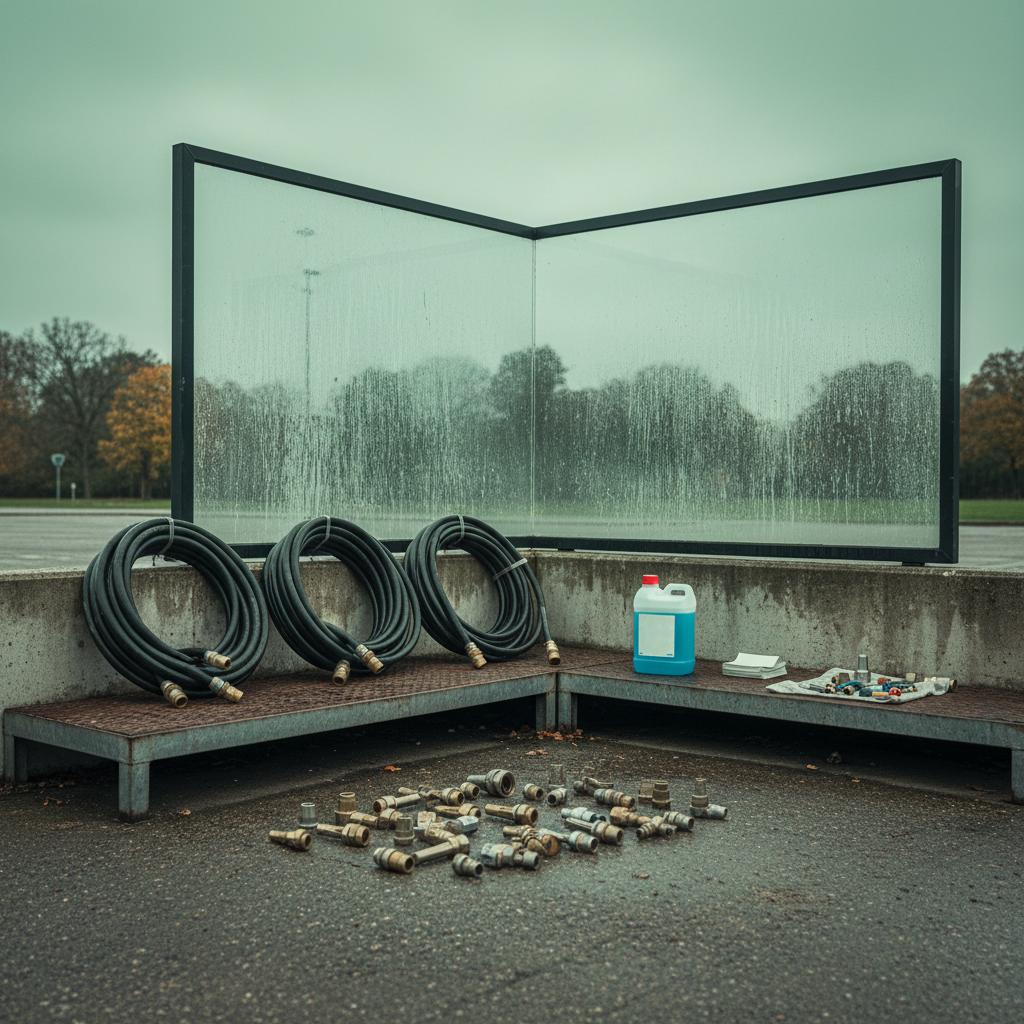
Where is the pressure washer? Still in the workshop from last time. The hose reel is somewhere else. The lance tip that fits this particular washer is in a drawer, but which one? The fittings need checking — last time one leaked and soaked the operator. Someone needs to figure out water access at the site, or fill a separate tank, or find a long enough hose to reach the nearest tap.
By the time the vehicle is loaded, the hoses are connected, the water supply is sorted, and the washer actually starts — 45 minutes to an hour have passed. For a job that takes 15 minutes of actual cleaning.
This is not a one-off frustration. For maintenance teams that need to wash things regularly — shelters, bins, machines, public furniture, building entrances — the preparation overhead repeats every single time. Over a week, it adds up to hours of lost productivity. Over a season, it becomes a serious operational cost that nobody tracks because “it is just a quick wash.”
Why the Setup Takes So Long
The root cause is that a traditional pressure washer is not a system — it is a collection of separate components that need to be assembled for each job.
The pressure washer unit itself. A separate water source (tank, tap connection, or bowser). Hoses and extension hoses. A lance with the right nozzle tip. Possibly a surface cleaner attachment. Detergent or cleaning chemicals in a separate container. Fittings and adapters that match this particular combination. And a vehicle that can carry all of it together.
Each component is stored separately, maintained separately, and has its own failure mode. A missing adapter, a cracked hose, an empty chemical container — any one of them stops the job before it starts.
What a Ready-to-Use System Looks Like
The Foresteel PW-series takes a different approach. The entire washing setup — water tank, pressure washer, hose reel, and cleaning accessories — lives together on a single compact steel frame with forklift pockets.
Nothing needs assembling. Nothing needs connecting. Nothing needs searching for in the workshop. The unit sits on a pallet or on the vehicle, permanently ready. When a washing job comes up, the response is: load it (or it is already loaded), drive to the site, pull out the hose, wash, retract, move on.
Setup time at each location: under 5 minutes. Because there is no setup — only deployment.
What This Changes in Practice
The difference is not just time saved per job. It changes whether the job happens at all.
When cleaning requires 45 minutes of preparation, teams defer it. The bus shelter gets skipped because “we do not have time today.” The bin area stays dirty until someone complains. The machine goes to the next job unwashed. Reactive cleaning replaces preventive maintenance — and reactive cleaning always costs more because the dirt has had time to build up.
When cleaning requires 5 minutes of deployment, it happens as part of the normal workday. The crew cleans the shelter while passing through on another task. The bin area gets a wash on the way back to the depot. Cleaning becomes routine instead of an event — and the municipality looks maintained instead of neglected.
The Practical Details
The PW-series is available in different tank sizes depending on work volume and carrier vehicle — from compact units that fit on a UTV or small pickup, to larger setups for extended cleaning routes. All share the same self-contained design: own water, own pressure, own hose, own chemical dosing. No external connections needed at the work site.
Forklift pockets on the base frame mean loading and unloading takes minutes. The same unit can move between vehicles depending on daily fleet availability — it is not permanently installed on one truck.
For teams that already have a UTV or compact tractor for grounds maintenance, the pressure washer becomes another attachment in the rotation: leaf trailer in autumn, tipping trailer for transport, pressure washer for cleaning. One vehicle, multiple functions, one operator.
Foresteel PW-series — mobile pressure washing for professional maintenance work. Available in different tank sizes for different carrier vehicles and work volumes. Contact us for a recommendation based on your operation, or explore the range.

 Compact, efficient professional equipment