



Mobile Water Bowsers for Professional Irrigation: Platform, Trailer, and Zero-Emission Options
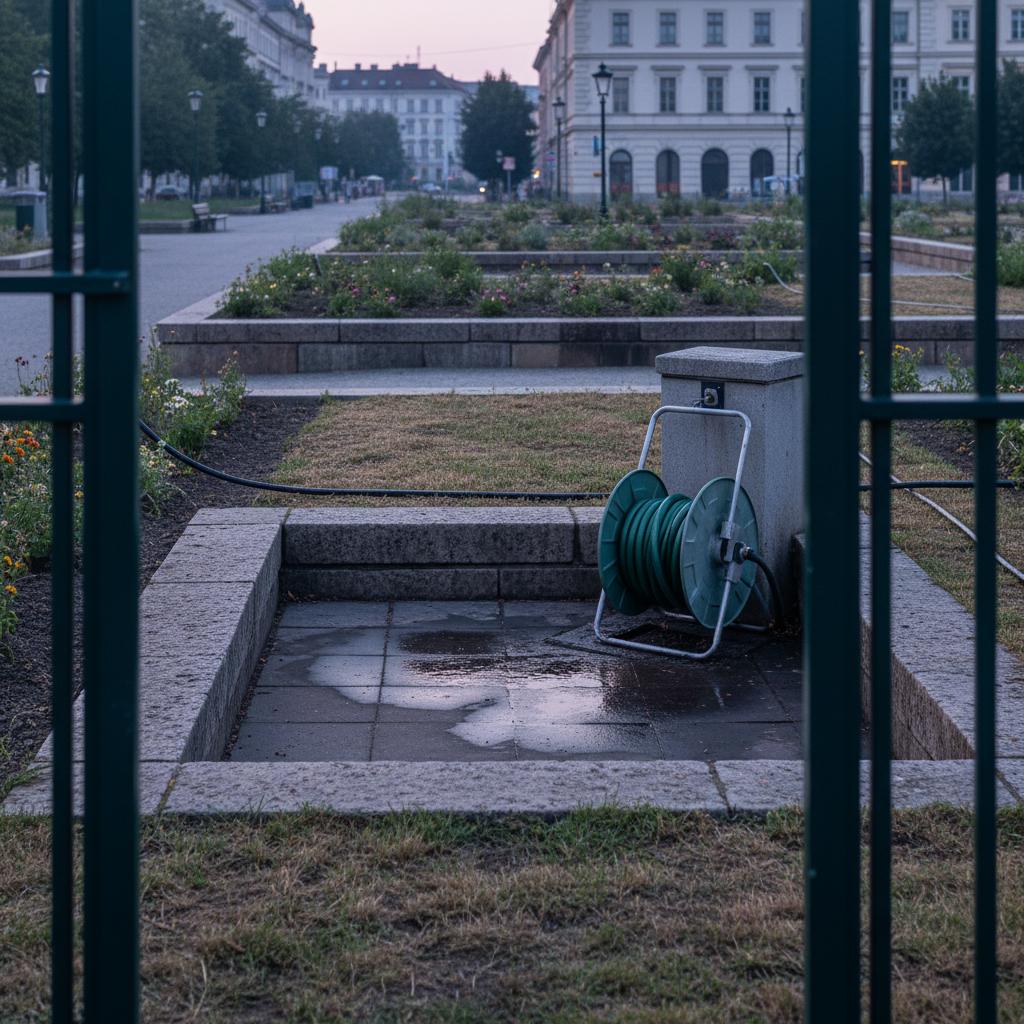
Fixed irrigation systems cover fixed points. The managed grass zones in the central park, the planting beds with infrastructure — if there is a water supply, it works. What fixed systems do not cover is everything else: seasonal planters moved for an event, newly-planted verge trees that need establishment watering, temporary floral displays, remote park sections, roadsides, or any location where the tap is simply not close enough.
For municipalities and professional grounds teams, the answer is mobile supply. This guide covers how mobile water bowsers work in a professional grounds maintenance context, how to choose between platform and trailer formats, and where the zero-emission variants fit.
What a Mobile Water Bowser Actually Is
In professional grounds maintenance, a mobile water bowser is a self-contained water supply unit: tank, pump, hose reel, and plumbing integrated on a compact frame, mounted on a vehicle or towed on a trailer. The operator drives to the point that needs water and works from the bowser’s own supply — no connection to mains infrastructure required.
A professional-grade bowser is not an IBC tank strapped to a flatbed. It is a pre-specified, pre-plumbed, turnkey set: components selected and tested to work together, delivered ready to work on day of arrival.
Applications in Professional Grounds Maintenance
The FTW range covers more than irrigation. In practice, a single unit typically serves multiple purposes across a season: spring and summer irrigation of flower baskets, planters, verge trees, and newly-seeded areas; on-site water supply for filling other equipment or wash-down operations; firefighting preparedness where static water supply is not available; event support for temporary outdoor infrastructure; and agricultural or horticultural operations across vineyards, orchards, and nurseries.
Platform vs. Trailer: Which Format Fits Your Operation
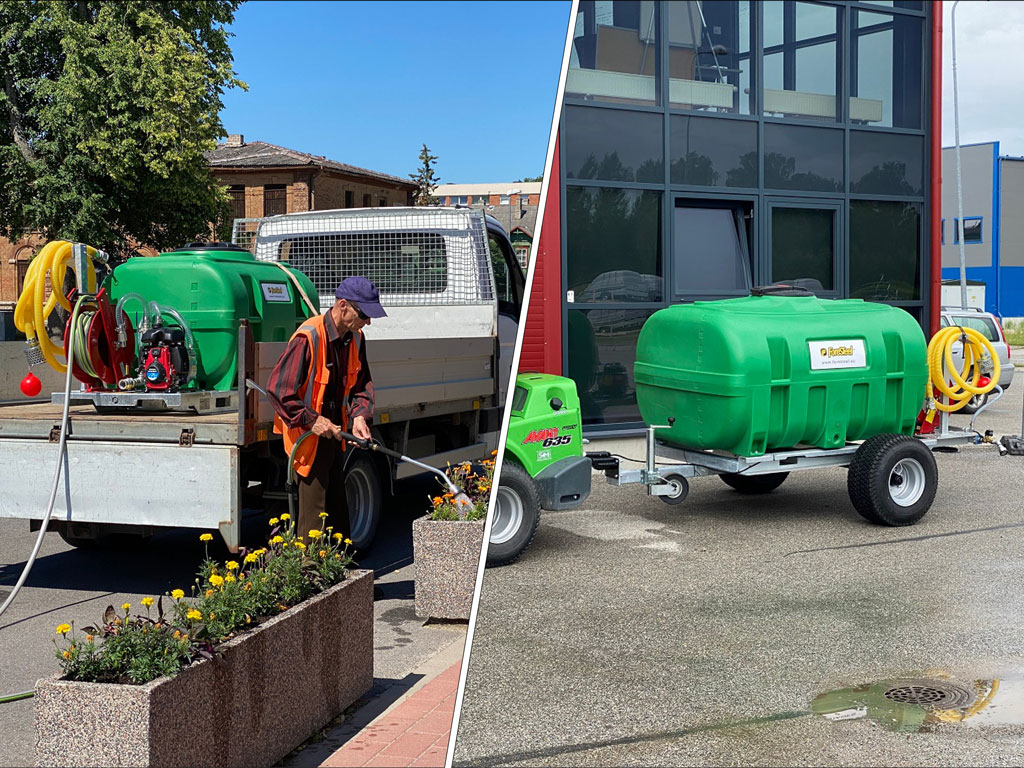
The FTW range is available in two formats, and the right choice comes down to how the machine needs to move.
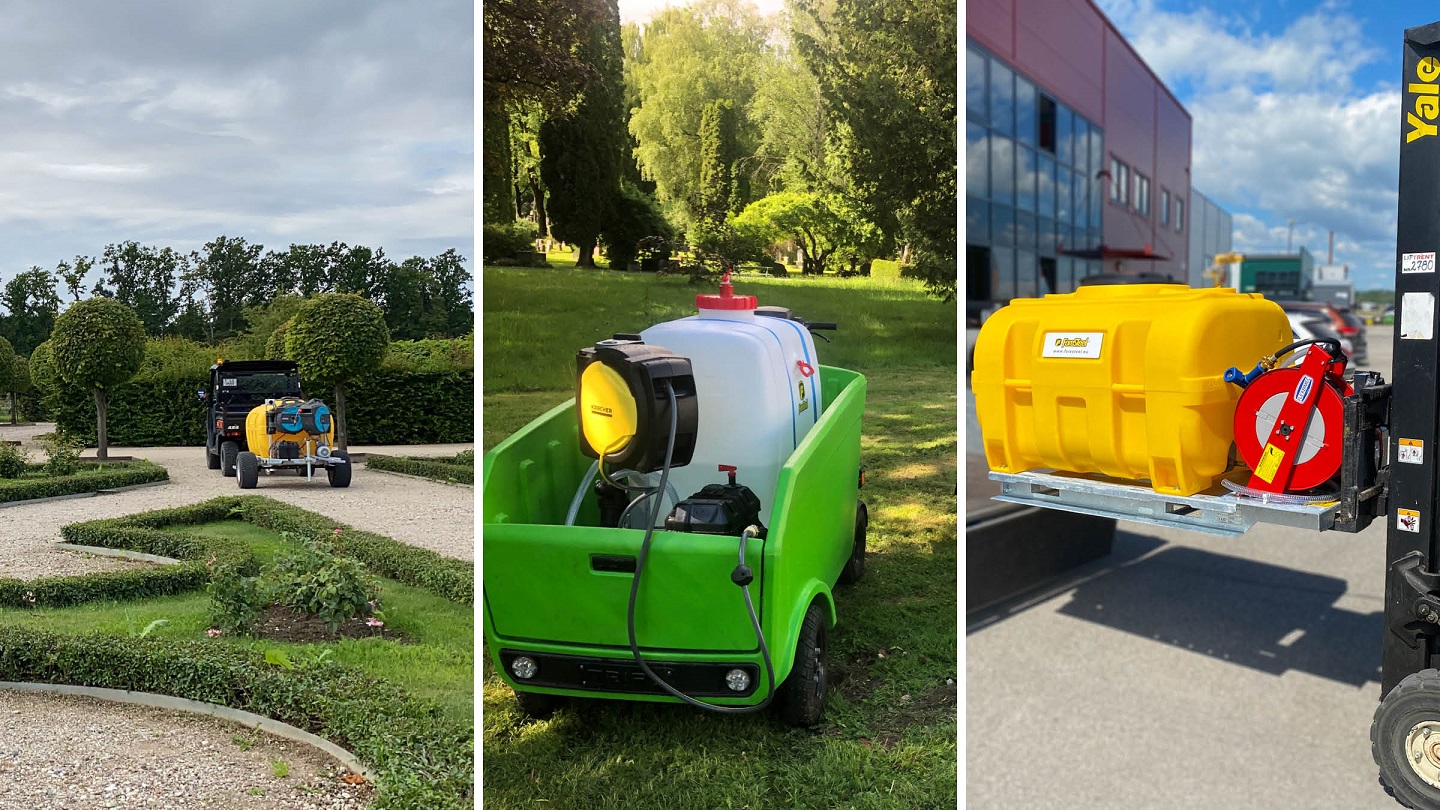
Platform format — The bowser sits on a forkliftable steel subframe and loads onto an existing vehicle: municipal service truck, pickup, flatbed, or cargo trailer. One bowser serves multiple vehicles across the week without being permanently assigned to any of them. The more flexible option for operations with varied vehicle fleets or shared equipment pools.
Trailer format (FTW-T range) — The bowser is mounted on a tow trailer for on-site movement. Note: FTW trailer variants are designed for on-site towing, not road transport between sites. If your operation requires transit on public roads, the platform format loaded onto a road-going vehicle is the correct choice. Market-specific road-use rules are the operator’s responsibility.
Choosing Tank Size
The FTW range covers four tank volumes: 300 L, 600 L, 1,000 L, and 2,000 L.
The FTW-600 suits routes with regular refill access or shorter daily rounds and fits comfortably in vans and smaller service trucks. The FTW-1000 is the most common professional choice — sufficient capacity for a half-day route without refilling and the standard configuration for municipal irrigation crews. The FTW-2000 covers operations across large distances between refill points and requires appropriate vehicle payload rating.
The Zero-Emission Option
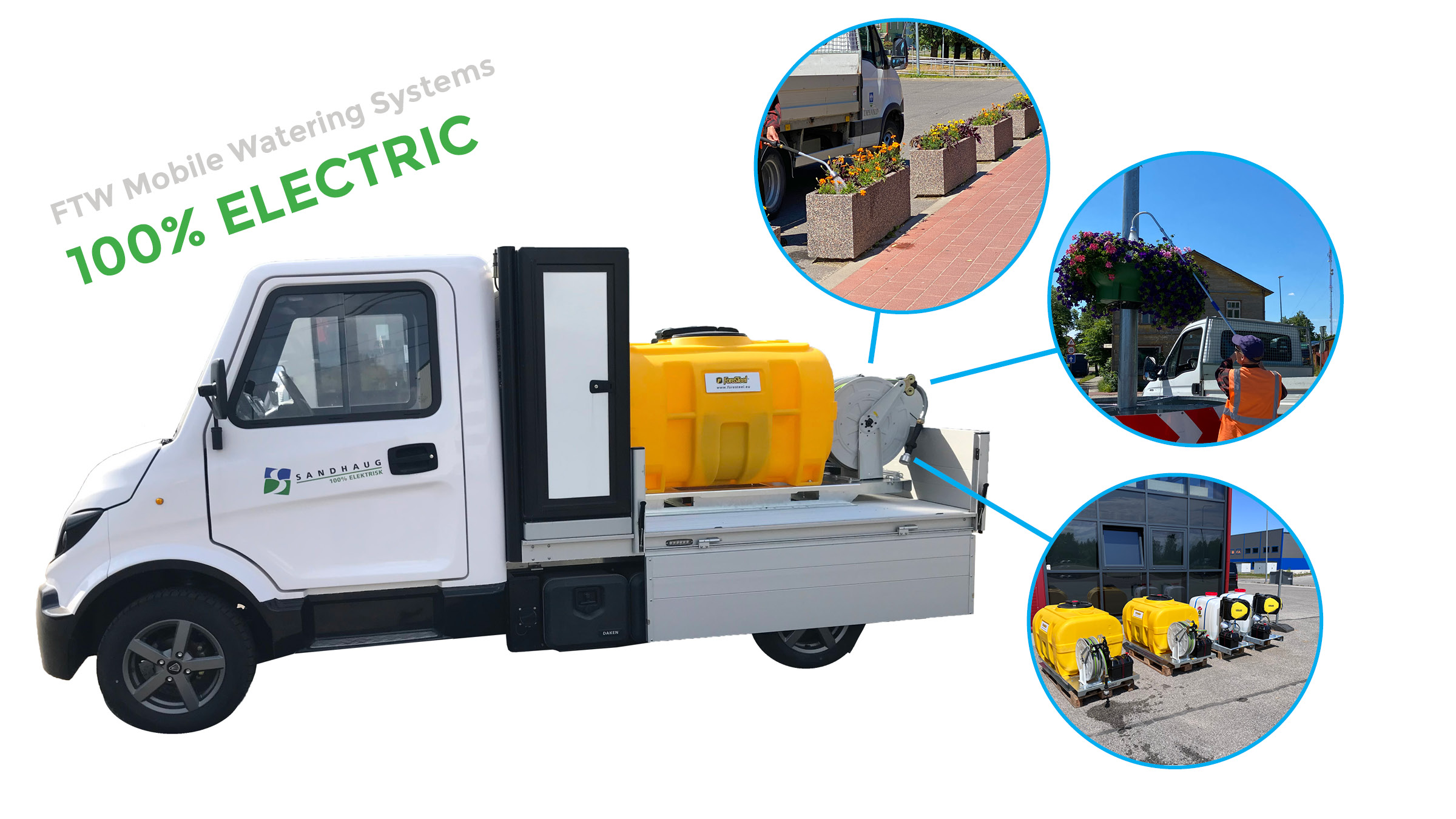
The FTW-E range replaces the combustion pump with an electric motor. The tank, plumbing, hose, and frame are identical to the standard range.
This matters in specific operating contexts: early-morning urban operations where noise restrictions apply before 07:00; emissions-sensitive locations such as pedestrian zones, hospital grounds, or indoor spaces; and green procurement requirements where municipal tenders specify zero-emission equipment. If your operation involves any of these constraints, specify the E variant from the outset — retrofitting is not practical.
Foresteel FTW Range: Summary
The FTW range covers platform and trailer configurations from 300 L to 2,000 L, with zero-emission electric-pump variants available across sizes. All units are delivered as complete, tested sets — tank, pump, hose reel, and plumbing integrated on a forkliftable frame. Operational on day of arrival.
For current pricing and configuration options, see the Foresteel FTW irrigation range or contact us with your tank size requirement, vehicle fleet, and intended applications.

 Compact, efficient professional equipment