



Mobile Pressure Washing Without Mains Water or Power: A Guide for Professional Operators
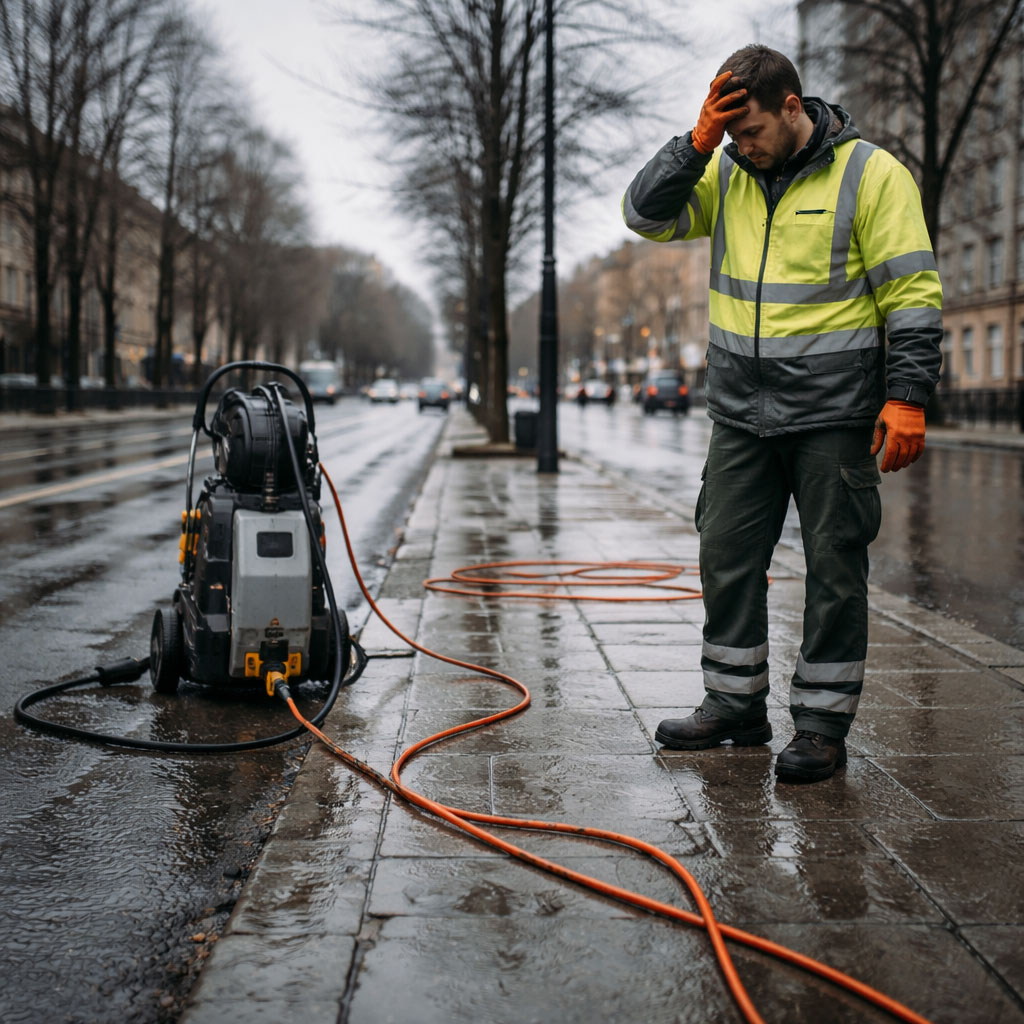
Most professional pressure washers need two things before they can work: a water connection and a power source. On a fixed wash bay, that is not a problem. On a mobile route — travelling between bus shelters, park furniture, construction sites, or machinery storage yards — it defines your entire logistics chain.
Every stop requires either access to a water tap or carrying enough hose to reach one. Every petrol-free model needs an extension cable long enough to be a hazard across a car park or public footpath. The cleaning itself takes minutes; the setup and breakdown take much longer.
Self-contained mobile pressure washers work differently. This guide explains how, and who they are built for.
How a Self-Contained Mobile Pressure Washer Works
A self-contained unit integrates a water tank, pressure pump, hose reel, and chemical dosing system on a single compact steel frame — pre-plumbed and tested as a complete set. There is no mains water connection needed. The unit carries its own supply.
Power comes from the unit’s own pump engine, not from an external socket. The operator loads the machine onto a pickup, van, UTV, or municipal service truck, drives to the first site, and starts working. When the tank depletes, it refills from any available water source on-site — a bowser, a tanker, a standpipe — and the route continues.
The practical result: a wash route is no longer defined by where cables and hoses can reach. It is defined by how much ground a vehicle can cover in a working day.
What Gets Cleaned
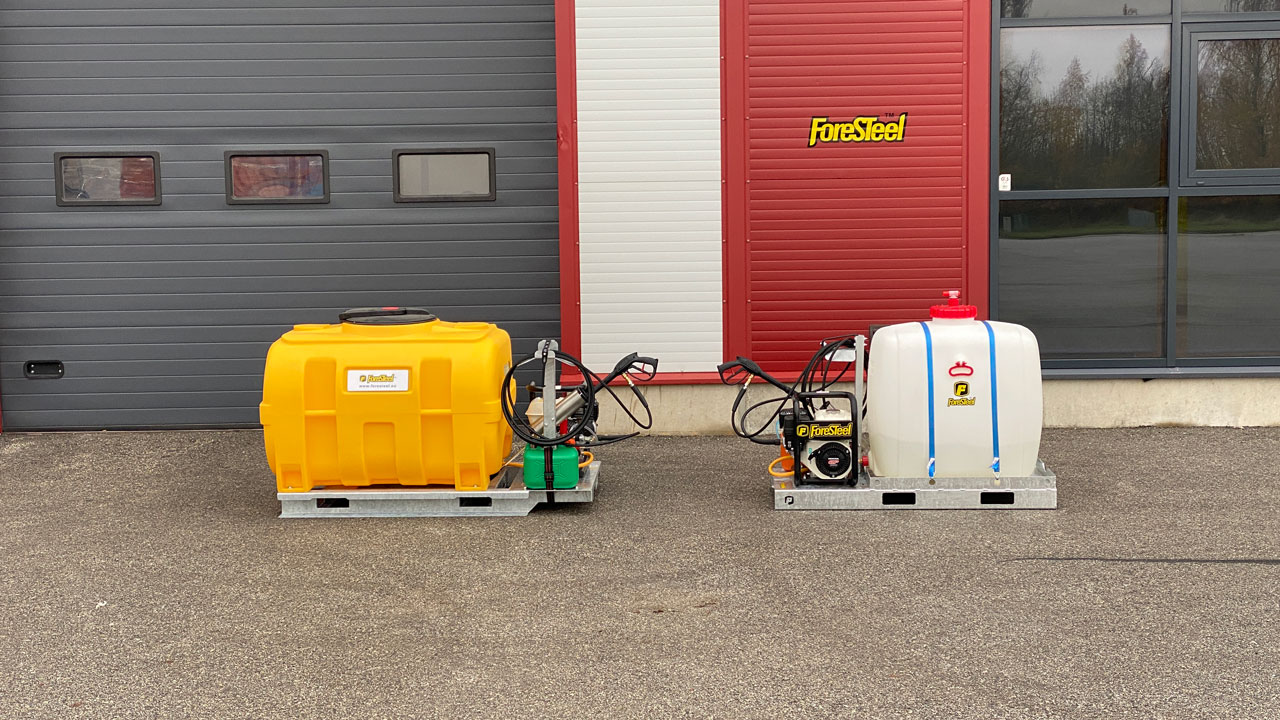
The applications are broad precisely because the machine is not tied to a fixed location: bus stops, waiting pavilions, and transit shelters; park benches, public seating, and outdoor furniture; playground equipment and sports facilities; road signs and public information boards; construction and agricultural machinery between uses; rental equipment fleet turnarounds; building facades, walls, and fences; vehicles, trucks, and utility equipment.
For municipal operations, the value is in route consolidation: one crew, one vehicle, one machine covering an entire sector of street furniture in a single shift — without logistics overhead at each stop. For operators mounting the unit on a compact UTV, see also our guide on turning a Kubota RTV into a fully self-sufficient mobile washing unit.
Route Efficiency: What Changes
The efficiency gain from autonomous operation is not marginal. Customers running regular municipal wash routes report significant reductions in operator time per site compared to mains-dependent workflows — in some cases around 60% per-site time reduction once logistics overhead is eliminated.
The mechanism is straightforward: when setup and breakdown time drops to near zero at each stop, more of the working day is spent on actual cleaning. A crew that previously managed eight to ten stops per day on a furniture route can cover considerably more with a self-contained machine.
PW-300 vs. PW-600: Choosing the Right Model
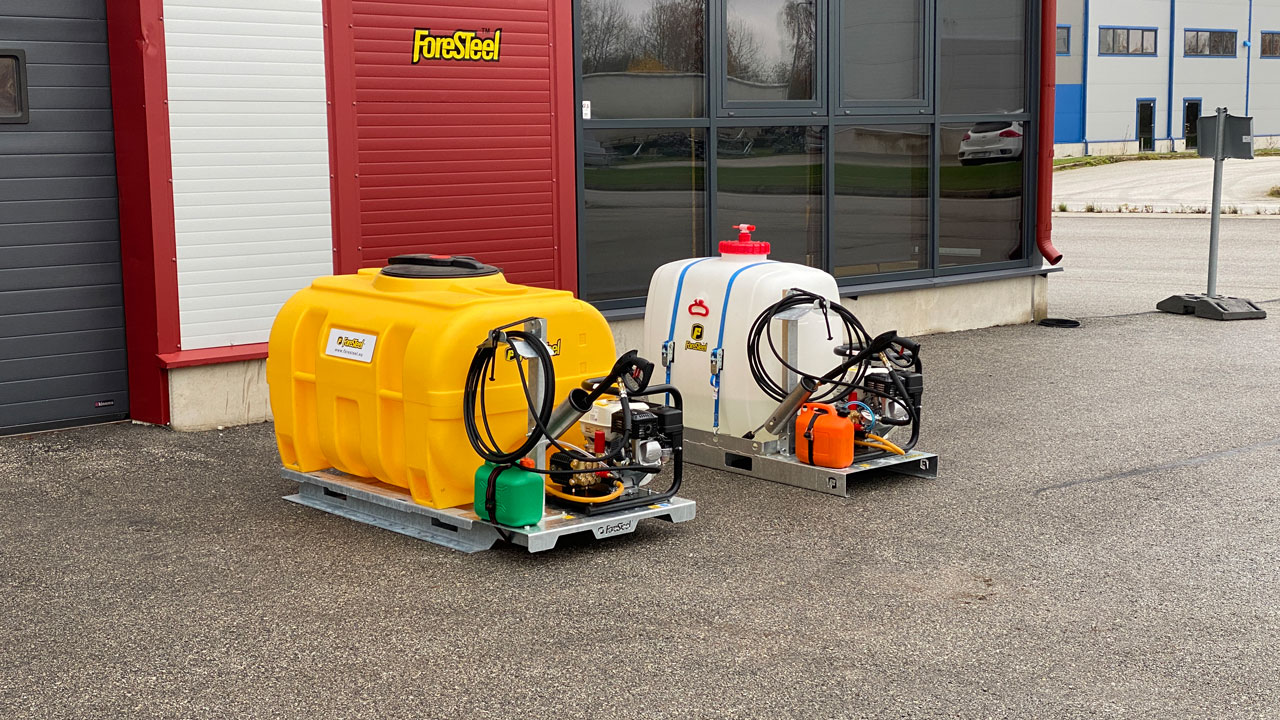
Foresteel offers two models in the mobile pressure washer range.
PW-300 — Compact footprint optimised for vans, small pickups, and UTVs. The right choice for operators covering smaller sites or needing to move the machine frequently between vehicles. Delivers professional cleaning performance in a compact format.
PW-600 — Larger tank, compatible with an automatic hose reel for faster deployment at each stop. The standard choice for municipal service providers and landscapers running regular multi-stop wash routes. If the route involves more than four to five stops per day, or covers sites where the hose needs to deploy and retract quickly, the PW-600 is the more efficient configuration.
Both models are mounted on a forkliftable steel subframe. Lift on and off vehicles in minutes, transfer between vehicles without a dedicated team.
Who This Is Built For
Municipalities and public works teams — Regular maintenance of street furniture, public spaces, and transport infrastructure. Autonomous operation removes dependency on fixed water infrastructure at each site.
Municipal service contractors — Operating on behalf of towns and cities, covering large areas efficiently. Time-per-site reduction is directly billable efficiency.
Property managers — Maintaining multiple buildings, facilities, or commercial sites. One machine serves the whole portfolio from a single vehicle.
Machinery rental companies and agricultural dealers — Washing down rental machines on return without a fixed wash bay. The machine parks where the returned equipment is, not the other way around.
Landscaping and groundscare contractors — Cleaning equipment and surfaces across client sites without arranging water access in advance.
Configuration Options
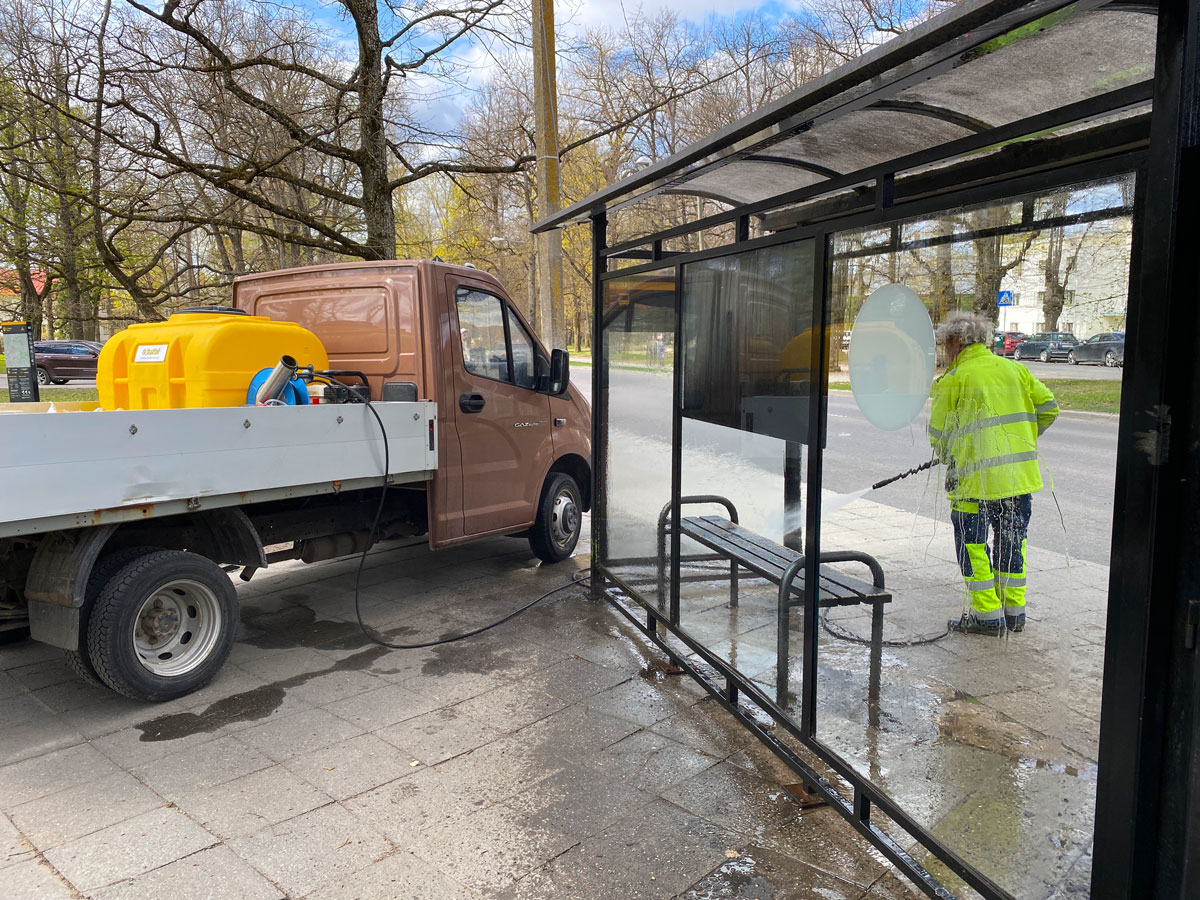
Both PW models support optional equipment: automatic hose reel (PW-600) for faster deployment; chemical dosing system; zero-emission electric pump variant for noise-sensitive or emissions-restricted environments; wheeled chassis for on-site tow configuration.
Specifying for a New Season
The right starting point is your route: how many stops, what vehicle, how often. From there, the PW-300 or PW-600 configuration is a straightforward decision.
Browse the Foresteel PW range or contact us with your route profile and we will recommend the right configuration.

 Compact, efficient professional equipment