



What Is a Debris Loader? A Practical Guide for Grounds Maintenance Teams
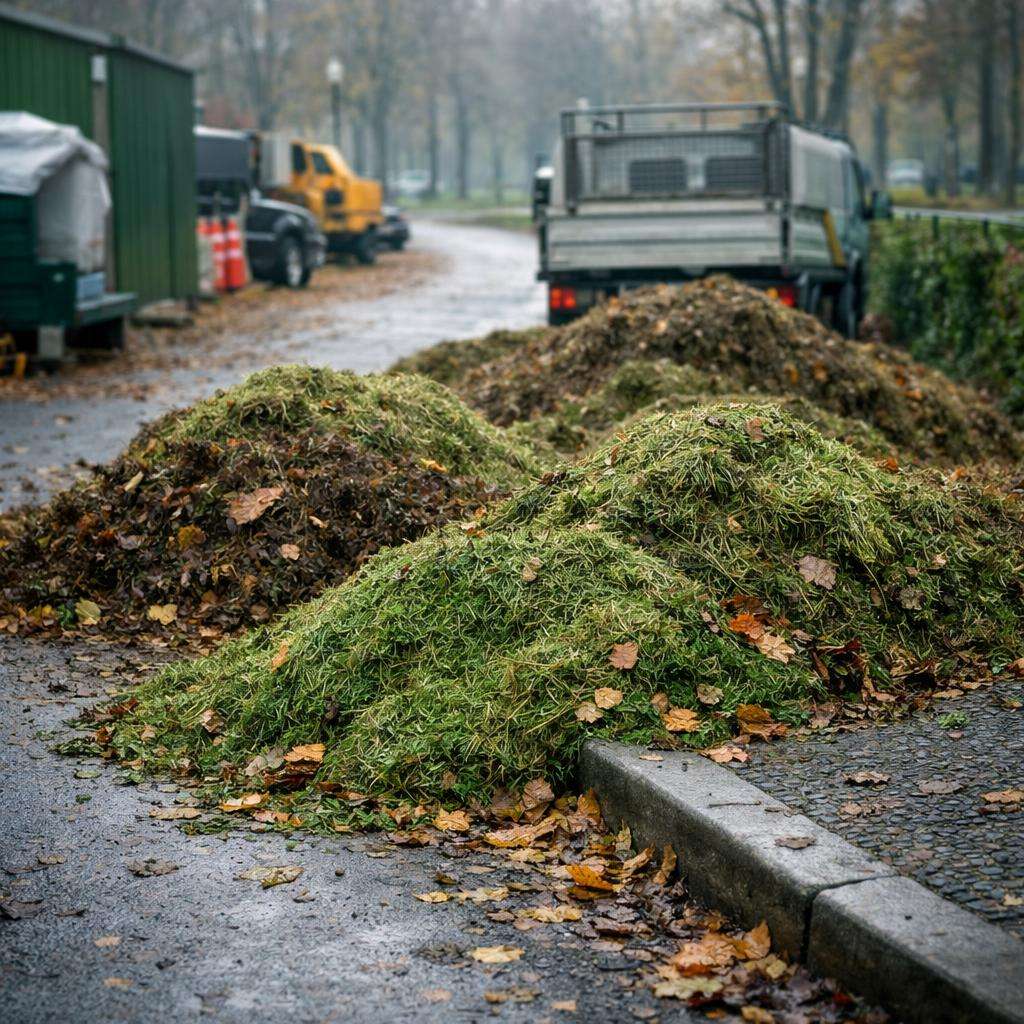
A debris loader is a high-capacity vacuum unit designed to collect loose organic material — leaves, grass clippings, hedge trimmings, litter, and similar debris — and move it directly into a trailer, truck body, or collection container. It is the professional-grade tool that replaces the slow cycle of blowing, raking, piling, and manual loading.
If your current leaf cleanup workflow involves handling the same material more than once, a debris loader is likely the machine that removes the most wasted time from the job.
What Does a Debris Loader Actually Do?
A debris loader uses a powered impeller to create strong suction through an intake hose. The operator directs the hose toward ground-level debris, which is drawn in, passed through the impeller (which also shreds the material to reduce volume), and deposited into whatever collection body is connected — a trailer, a truck bed with leaf box, or a dedicated container.
The shredding function is not a bonus feature. It is central to the machine’s value. Shredded leaves take up roughly 10% of the volume of loose dry leaves. That means fewer dump trips, longer working intervals, and less total transport time per day.
Common materials a debris loader handles:
- Leaves (dry and wet)
- Grass clippings
- Hedge and shrub trimmings
- Pine needles and seed pods
- Acorns and small fallen fruit
- Light litter (paper, plastic packaging)
- Wood chips and bark mulch
Who Uses Debris Loaders?
Debris loaders are standard working tools for municipal public works and Bauhof teams managing parks, pathways, cemeteries, and public green spaces. Landscaping contractors use them to add leaf cleanup capacity without hiring additional crew. Estates, campuses, and golf courses rely on them where large areas need clearing efficiently. Cemetery and memorial park maintenance crews use them for year-round path and grounds cleanup. And facility management teams at hospitals, corporate campuses, and schools use them wherever keeping large outdoor areas clean is an ongoing responsibility.
Debris Loader vs Leaf Blower
A blower moves material. A debris loader collects material. That distinction matters more than it seems.
A blower is a useful support tool — it can push leaves out of tight corners, off pathways, and into areas where collection is easier. But a blower creates an additional step in the workflow. After blowing, someone still needs to gather, load, and transport the material.
A debris loader combines the collection and loading steps into one action. The material goes from the ground directly into the transport container. For operations covering more than a few hundred square meters, this difference in workflow efficiency is significant.
Debris Loader vs Leaf Vacuum Trailer
A debris loader is a standalone vacuum unit. It is the right choice when you already have a suitable trailer, truck body, or collection container, when you want to integrate suction capability into a custom setup, or when you need modularity across different transport vehicles.
A leaf vacuum trailer is a complete all-in-one system — trailer, vacuum, and shredder integrated into a single unit. It is the right choice when you want a ready-to-work solution with no additional components needed, when you value the 2-in-1 conversion to a tipping trailer outside leaf season, or when you are equipping a team that needs the simplest possible deployment.
Neither is categorically better. The right choice is the one that creates the shortest, smoothest workflow for your specific operation.
What Makes a Professional Debris Loader Different?
Not all debris loaders are built for daily commercial use. The differences that matter over years of heavy service include housing material — professional units use wear-resistant steel (such as Hardox) in the impeller housing and high-abrasion areas, which extends service life dramatically compared to mild steel. Engine quality and parts support matter because a debris loader runs at high RPM for hours daily during peak season. Internal airflow design determines how efficiently the machine handles different materials. And serviceability affects long-term cost.
Explore professional debris loader options: See the Foresteel G2 debris loader range — built with Hardox wear steel and Vanguard engines for daily professional use. Or read the full Municipal Leaf Collection Guide.

 Compact, efficient and eco-friendly products