



Municipal Leaf Collection Guide (2026): Equipment, Workflow & Efficiency
Municipal leaf collection is one of the most labor-intensive seasonal tasks in public grounds maintenance. The difference between an efficient operation and a costly scramble comes down to three things: the right equipment, a logical workflow, and a system that minimizes wasted motion at every step.
This guide covers everything a municipal public works team, grounds maintenance contractor, or facility manager needs to make informed decisions about leaf collection in 2026.
Why Leaf Collection Matters More Than It Seems
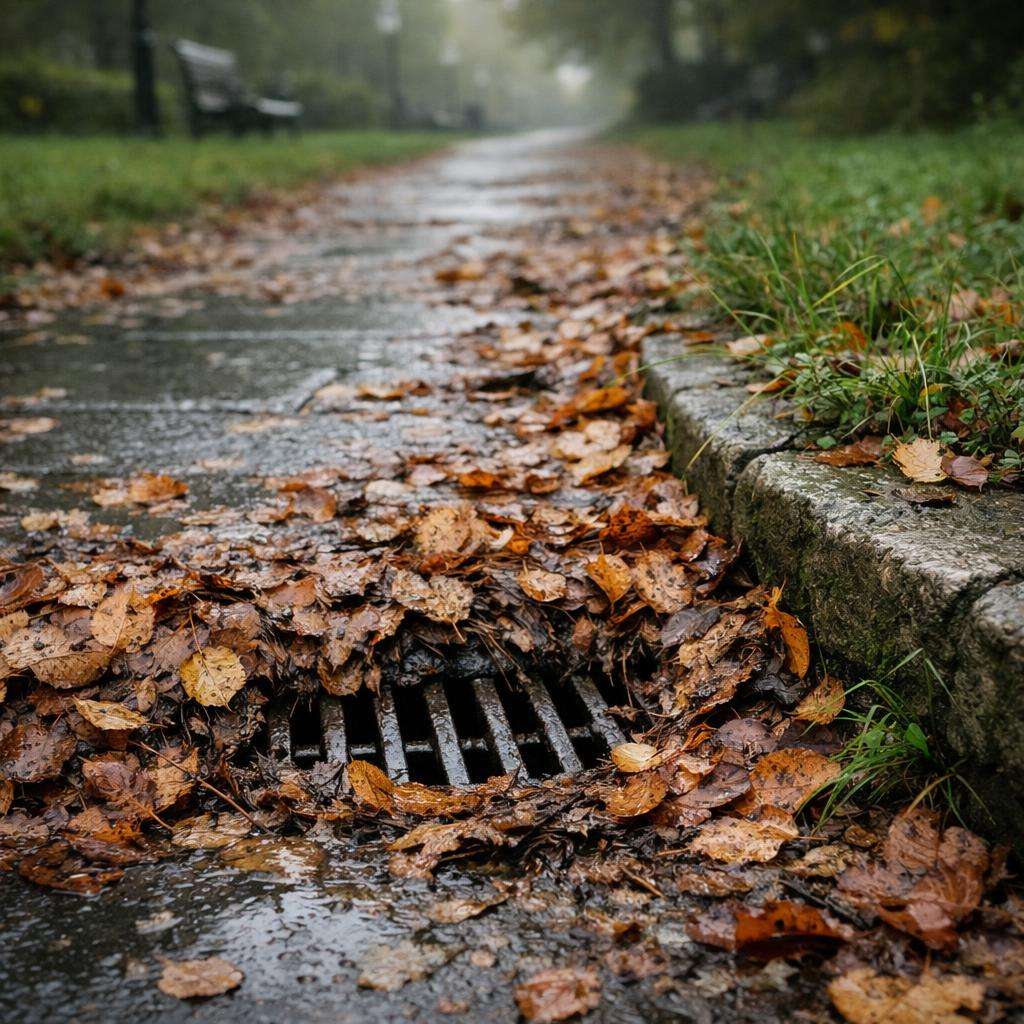
Leaves are not just an aesthetic issue. Accumulated wet leaves block drainage systems, creating flood risk during autumn rains. They form slippery layers on pedestrian paths, increasing liability. They smother turf and damage lawns if left through winter. And in many communities, residents expect clean public spaces — leaf-covered parks and cemeteries reflect poorly on the municipality.
The real cost is labor. Most municipal maintenance budgets are not limited by equipment — they are limited by available working hours and crew size. The fastest way to reduce the cost of leaf collection is to reduce the number of person-hours per hectare cleared.
The Three Main Methods of Leaf Collection
Manual collection (blowing + raking + loading)
The traditional approach: blow or rake leaves into piles, load them into a trailer or truck by hand, transport to a dump or composting site, return, repeat. This works for small areas but scales poorly. Every step involves separate labor, and the material is handled multiple times. For a 2-person crew covering a 3-hectare park, manual collection typically takes 2–3 full working days per pass.
Vacuum collection (direct suction into trailer)
A leaf vacuum trailer or debris loader collects leaves directly into a container through suction. The material passes through an impeller that shreds it, reducing volume by up to 90%. This eliminates separate loading, dramatically reduces dump trips, and allows a single operator to do the work of 2–3 manual workers. The same 3-hectare park can be cleared in less than a day.
Curbside collection (truck-mounted systems)
Common in American, but also some Europe municipalities where residents rake leaves to the curb. Large truck-mounted vacuum systems drive along streets and collect curbside piles. Effective for residential streets but not suitable for parks, cemeteries, campuses, or any area where a heavy truck cannot drive.
Equipment Types Explained
Leaf vacuum trailer
A towable trailer with an integrated vacuum and shredder unit. Available in capacities from 1.5 m³ to 5+ m³. Towed by lawn tractors, compact tractors, UTVs, or utility vehicles. The most versatile option for parks, pathways, cemeteries, and green spaces. Most professional models offer 2-in-1 functionality — the vacuum unit detaches in under 30 minutes, converting the unit into a standard tipping trailer for year-round use.
Best for: municipalities, estates, campuses, golf courses, cemetery maintenance, contractors managing multiple small-to-medium sites.
Debris loader (standalone vacuum unit)
A standalone vacuum/shredder unit that mounts on or connects to an existing trailer, truck body, or collection container. Offers flexibility for operations that already have transport equipment. Professional models use dedicated engines (typically Briggs & Stratton Vanguard) and feature wear-resistant housings for heavy daily use.
Best for: contractors with existing trailer fleets, custom setups, operations needing modular flexibility.
Leaf blower (support tool)
Useful for positioning leaves — moving them out of corners, off pathways, and into areas where a vacuum can collect them. Not a collection tool on its own. Best used in combination with a vacuum system, not as a replacement.
The Workflow That Saves the Most Time
The biggest efficiency gain does not come from more powerful equipment — it comes from eliminating unnecessary handling steps.
An inefficient workflow: blow → rake → pile → load by hand → transport → dump → return → repeat. Every step is a separate labor task. The material is touched 3–4 times.
An efficient workflow: vacuum directly into trailer → transport when full → tip to dump → return. The material is touched once. One operator does the entire cycle.
The shredding function multiplies this advantage. Shredded leaves take up roughly 10% of the volume of loose dry leaves. A 2.5 m³ trailer holds the equivalent of over 10 m³ of unshredded material. Fewer dump trips mean more time collecting and less time driving.
Choosing Equipment by Operation Size
Small municipalities (under 10,000 residents, 1–3 person crew)
A compact leaf vacuum trailer (1.5–2.5 m³) towed by an existing lawn tractor or UTV. One operator manages parks, paths, schoolyards, and public greens. The 2-in-1 design means the same machine handles soil and gravel transport in spring and summer. Total investment is typically under €15,000 including vacuum unit.
How and why for small municipalities.
Mid-sized towns (10,000–50,000 residents)
Multiple units or a larger trailer (3.5–5.0 m³). Road-legal versions (EU Type Approved with CoC) allow quick transit between sites on public roads. Consider zoning your coverage area so each crew handles a defined sector without overlapping routes.
Contractors serving multiple clients
Flexibility is key. A debris loader paired with your existing trailer fleet lets you scale without replacing transport assets. For contractors adding leaf cleanup as a service line, the learning curve is short and the ROI is fast — most report payback within the first full season.
Wet Leaf Collection
Wet leaves are where most methods fail. They cling to surfaces, resist blowing, are heavier to handle, and fill containers faster to maxmium loading capacity as they weigh a lot more. Direct vacuum collection handles wet leaves far better than manual methods because the suction works regardless of moisture, and the shredder reduces even damp material effectively.
The key specifications for wet-leaf performance are suction volume (measured in m³/min or CFM), impeller design and housing durability, and hose diameter. Larger hose diameters reduce clogging with wet material, yet lower airflow speed. We have chosen 200mm (8″) as the sweet spot for longer work area.
Cost of Ownership
When evaluating leaf collection equipment, purchase price is only the starting point. The factors that determine true cost over 5–10 years include labor savings per season (the largest factor by far), fuel and consumables, maintenance and wear part replacement, dump trip frequency and transport cost, off-season utility (does the machine earn its keep year-round?), and expected service life.
A well-maintained professional leaf vacuum trailer or debris loader typically delivers 10+ years of reliable service. The labor savings alone — often 50–80% reduction in person-hours compared to manual methods — mean most machines pay for themselves within 1–2 seasons.
Hardox® and Replaceable Liners: The Secret to the G2’s Low Cost of Ownership
Making the Decision
If you are evaluating leaf collection equipment for the first time, start with three questions:
- What tow vehicles do you already have? This determines which trailer or loader size fits your fleet.
- What is your biggest bottleneck? If it is labor, focus on direct vacuum collection. If it is transport, focus on shredding and trailer capacity. If it is access, focus on compact equipment that fits your spaces.
- What will the machine do outside leaf season? A 2-in-1 trailer that works year-round is a fundamentally different investment than a single-purpose machine that sits idle 7+ months per year.
Ready to explore specific equipment options? Browse Foresteel leaf vacuum trailers or the Foresteel G2 debris loader range, or contact us with your current setup and we will help you find the right fit.


 Compact, efficient and eco-friendly products